
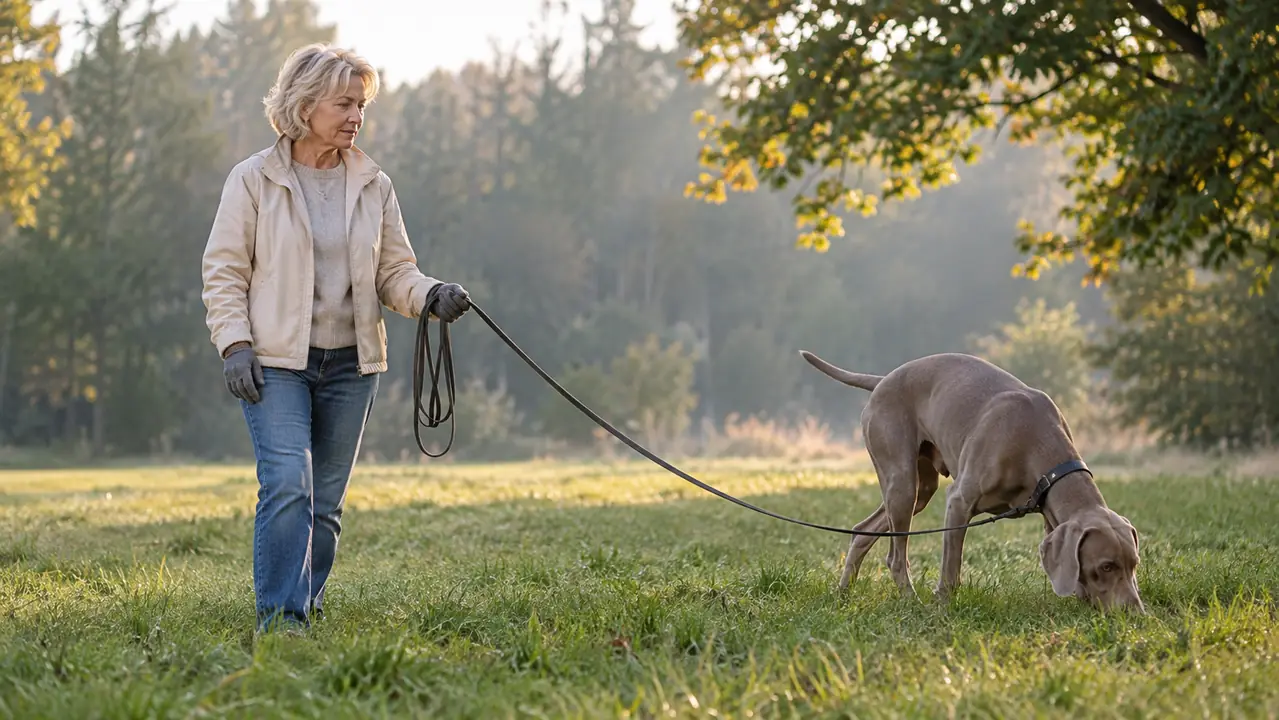
The first time I tried to teach Biscuit to come when called, I did what most people do. I stood in the middle of the back yard, said his name in my cheeriest voice, and got nothing back but a wag from thirty feet away. He was not being stubborn. He was out of range of anything I could do about it. Biscuit is a 4-year-old Lab mix, 62 pounds, and I adopted him from a shelter at 14 months. For the first year I had him, recall was a coin flip inside a fence and a fantasy anywhere else.
What changed it was the least interesting thing I own. The Hi Kiss obedience recall training lead is 15 feet of 3/4 inch nylon with a swivel bolt snap at one end and nothing else on it. I have used it for 18 months now, two or three times a week, always for recall practice and never for a regular walk. It did more for Biscuit's coming when called than everything else in my training drawer combined, and it did it by doing almost nothing.
The Quick Verdict
Unglamorous, almost nothing to it, and the one piece of equipment that made recall practice possible for us. It is a tool, not a teacher, and it will not train the dog for you.
Amazon Check Today's Price →Fifteen Feet of Slack Is Where Recall Gets Learned
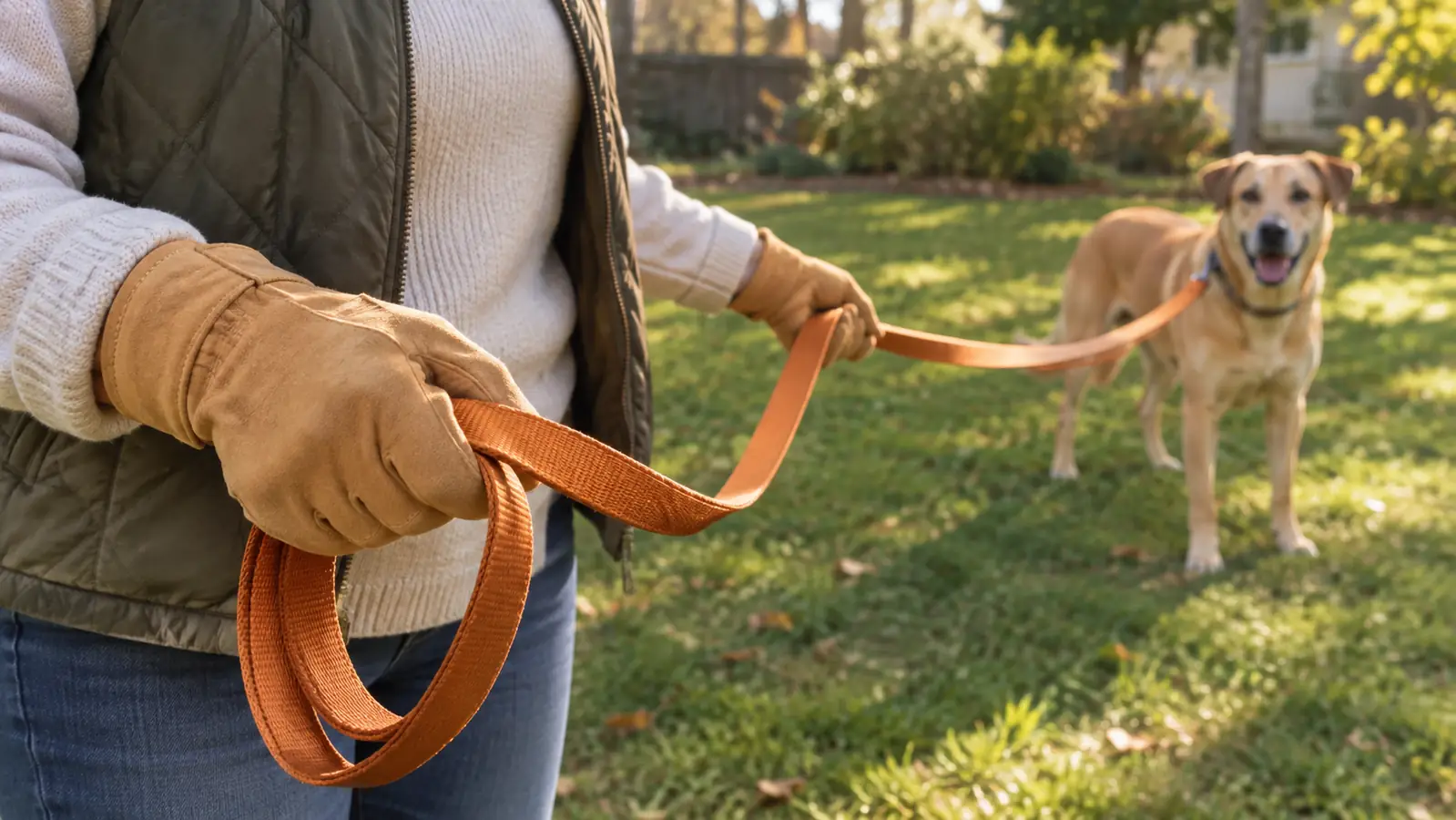
The Hi Kiss training lead, 15 feet of 3/4 inch nylon with a swivel bolt snap. The same one Biscuit has dragged through the greenway for 18 months.
Amazon Check Today's Price on Amazon →How I've Used It
I bought the Hi Kiss lead 18 months ago, a few weeks after I gave up on a retractable leash. The retractable was the wrong tool for this job. It keeps a light tension on the line at all times, and a dog on the other end never gets to feel slack and decide for himself to turn around. The long line is the opposite. When Biscuit is somewhere inside that 15 feet and I am not holding tension, the only thing pulling on him is his own curiosity.
My routine is unremarkable. Twice a week we drive to the greenway early, before the cyclists and the stroller crowd, and work for 15 or 20 minutes. On the other days we use the back yard, which is fenced at 4 feet and wide enough for a full 15-foot circle. I clip the snap to the back ring of his plain flat collar. I do not clip it to the front chest ring of the Easy Walk harness he wears on walks, and that is the one piece of advice in this review I would stand behind hardest.
Where we practice matters more than how long we practice. The yard is fine for building the habit but it is boring, and a bored dog is not learning much. The greenway is distracting, which is the point, but too much distraction early on just sets both of you up to fail. I moved back and forth between the two for months, and I still do whenever a new cue needs work.
Everything stays in a rotation. Harness and a 6-foot leash for walks. Long line for recall practice only. Clicker for new skills. Treat pouch for carrying the rewards. The KONG for when Ray and I leave the house. I have tried mixing them up, mostly out of laziness, and it makes a mess of the training. The dog learns the equipment, and it is easier to keep each one attached to one job.
What 15 Feet Actually Buys You
Fifteen feet sounds like nothing until you stand at one end of it with a dog at the other. It is enough room for him to make a genuine decision. At six feet, a dog is basically still beside you and a recall is a formality. At 15 feet he can drift toward a smell, think it over, and then turn back because I called and the chicken in my pouch is worth more than whatever he found. That turn is the whole skill. You cannot practice it if the dog never gets far enough away to have the thought.
The length is also what makes the practice safe. I have never let Biscuit off line in an unfenced area and I do not intend to start. There are cyclists, joggers and a running argument with a goose at our greenway, and 15 feet of nylon is the difference between a training session and a phone call from a stranger two neighborhoods over. If he bolts, he gets 15 feet and a firm stop.
The width took me by surprise. Three quarters of an inch of nylon is easy to feel through a glove and thick enough that it does not saw at your hand the way a thin cord does when a dog hits the end of it. Biscuit is 62 pounds, which the listing puts in the medium range, and this is right for him. A much heavier dog would want more line in the hand than this.
One detail I did not expect to care about is the swivel bolt snap. Biscuit circles when he is excited, and a fixed snap would twist the line into a braid within a week. The swivel lets the line hang straight no matter how many times he goes around. It is a small thing that stops being small at 18 months of use.
The Back Ring Rule I Won't Break
On walks, Biscuit wears the Easy Walk harness and the leash goes on the front chest ring. That is what stopped his pulling two years ago and I still use it twice a day. The long line is a different job, so it goes on the back ring of a flat collar instead.
That is deliberate. A front clip works by turning the dog's body when the line goes tight. On a 6-foot walk that is a gentle nudge and it does exactly what it is supposed to. On 15 feet of line, with a dog building speed toward something interesting, hitting the end of a front clip puts a twist across one shoulder that I do not want to see. The back ring spreads that same stop across the whole body. Dr. Sellers explained the mechanics to me and it matched what I had already suspected from watching him run.
The other reason is simpler. The front clip is doing a job on walks and I do not want Biscuit to associate that harness with a 15-foot sprint. He wears the harness for structured walking and a flat collar with a back ring for practice. Two jobs, two pieces of gear, no confusion about what is expected of him when I reach for the snap.
Five Months of Recall Practice, in Order
I keep a notebook, mostly because I forget things. Weeks 1 through 8 were in the fenced back yard. I started at about six feet, said his name once, and paid with a piece of chicken from the eBasics pouch when he turned and came. If he did not come, I did not repeat the cue. I walked to him, reset, and tried again from less distance. By the end of week 8 he was coming from the full 15 feet in the yard maybe eight times out of ten. That is the point where I stopped counting it as luck.
There was a bad stretch in month 3. He found something dead and interesting near the treeline and no amount of chicken was going to compete with it. I did not fight him for it. I walked to him, took hold of the line close to the snap, and led him away without saying much of anything. The cue stayed clean because I did not use it when I already knew it would fail. Losing that one afternoon was worth more than winning an argument I could not win.
Month 2 through month 5 was the greenway, and it was like starting over. Different smells, other dogs, the goose. The first three sessions I did almost nothing but stand there and hand him a treat for checking in on his own. It took about five months in all before I would call his recall there reliable. Reliable, to me, means he turns on the first cue nine times out of ten and I am not surprised when he does it.
One small thing that helped. The HoAoOo clicker is for brand new behaviors, but recall is not new anymore, so I use a plain 'yes' as the marker and follow it with food. Same information, less equipment to juggle while 15 feet of nylon is sliding through my hand.
By the end of week 8 he was coming from the full 15 feet in the yard, eight times out of ten. At the greenway it took five months.
The Part Nobody Warns You About
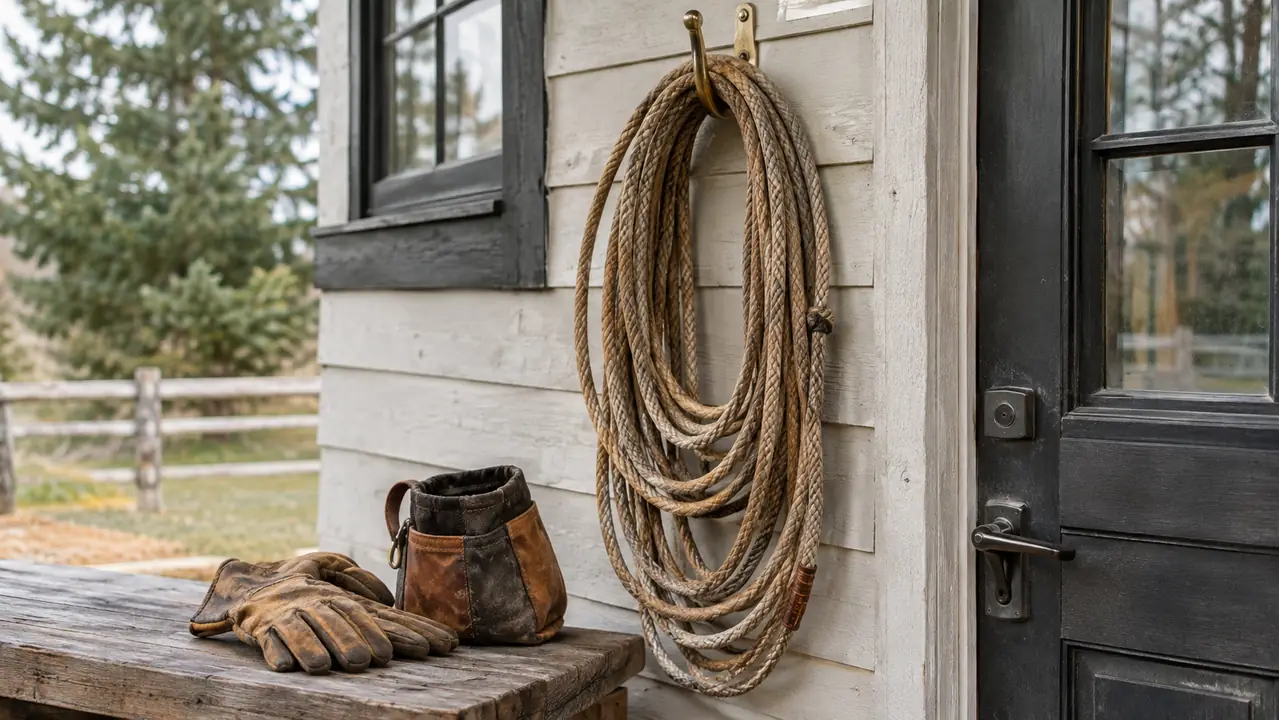
Your hands. Nylon plus a 62-pound dog at a dead run is a rope burn waiting to happen, and I found that out in the first month. I wear leather work gloves every session now, and I do not loop the line around my wrist or my fingers. If he hits the end with my hand threaded through a loop, something in my hand gives before the line does. I hold it flat across the palm with a couple of feet of slack and let it pay out.
The other thing is coiling. Fifteen feet of nylon does not coil itself, and if you drop it in the grass it will collect every burr in Knox County. I coil it hand over hand and hang it on a hook by the back door. Two minutes, every single time, and it is the reason the line is still in one piece after 18 months. In tall grass the line goes down and you will spend a minute finding it again.
What It Is Not Good For
It is not a walking leash. I tried it on a neighborhood walk twice early on and both times it was far more line than I wanted on a sidewalk. There is no traffic control in 15 feet of slack. Biscuit walks on the harness and a 6-foot leash, and that is settled.
And it is not a shortcut. The line does not teach recall. It makes recall teachable by keeping the dog close enough that you can reward the choice in the moment it happens. If you put a dog on 15 feet of nylon and then ignore him for half an hour, you have a dog on a long line. That is all you have. The repetitions are the training. The line only makes them possible.
I would also not hand this to a child to hold. Fifteen feet of line and a dog that spots a squirrel at the wrong moment is more pull than most kids are ready for, and I say that as someone who drove a bus full of them for decades.
What I Liked
- Fifteen feet gives a dog room to make a real choice, which is where recall actually gets learned
- Three quarters of an inch of nylon is easy to feel and easy to grip through a glove
- The swivel bolt snap kept the line from twisting into a braid when Biscuit circled
- Simple enough to clip on and go, with no mechanism that can fail
- Still in one piece after 18 months of two or three sessions a week
Where It Falls Short
- Nylon will burn a bare hand, and gloves are not optional with a strong dog at speed
- No traffic control at all, this is not a sidewalk leash
- Coiling 15 feet by hand after every session gets old fast
- In tall grass the line goes down and takes a minute to find
- A dog that bolts still hits the end at speed and the stop is sudden
Who This Is For
This is for the owner whose dog knows the word 'come' perfectly in the kitchen and acts like he has never heard it outdoors. It suits someone willing to give up 15 minutes, two or three times a week, for a few months, somewhere with open grass and no traffic. The Hi Kiss lead in 15 feet and 3/4 inch suits a dog Biscuit's size well. The same lead comes in longer lengths and I have not used those, so I cannot tell you how they handle.
It also suits a household that has already tried something and been disappointed. I spent a year with a retractable leash and a pocket full of treats, getting nowhere. If that sounds familiar, the problem was probably not your dog.
Who Should Skip It
Skip it if you want a hands-off answer. Nothing retracts, there is no button, and the first month is repetitive in a way that is hard to dress up. Skip it if your dog has a bite history or a serious reactivity problem. Fifteen feet of line gives a dog room to build real momentum, and that is work for a professional, not for a retired bus driver with a notebook and good intentions.
Skip it if you have nowhere safe to practice. A parking lot, a sidewalk, or a dog park with other people's dogs in it is not the place to learn this. I would rather you waited for a quiet morning at a greenway than rushed it on a street.
If Your Dog Only Comes Inside the House, Start Here
Two or three sessions a week, 15 minutes each, on open grass. That is the whole program. The 15-foot Hi Kiss lead is what makes it possible.
Amazon Check Today's Price on Amazon →