
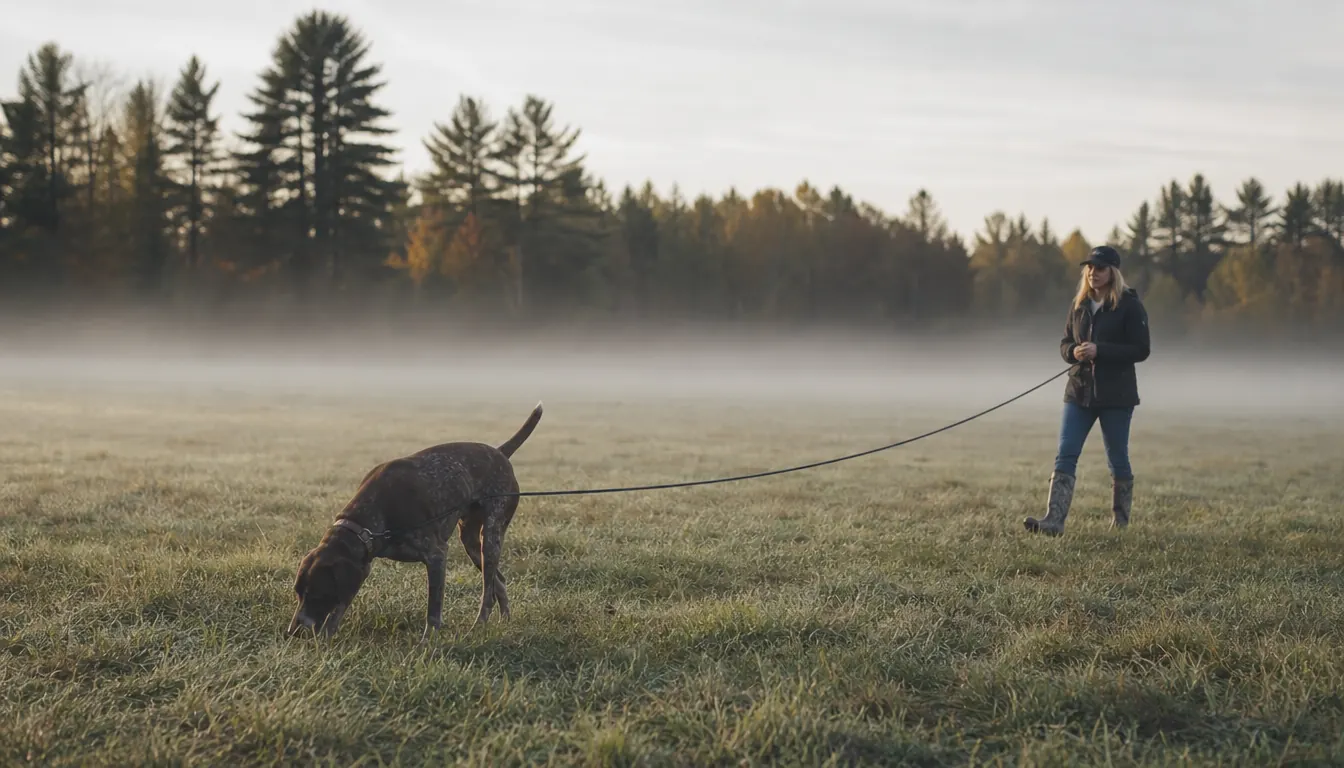
Two years and ten months ago I drove to a shelter in Knoxville and came home with a 14-month-old Labrador mix named Biscuit. He weighed 62 pounds then, and he still does, and he pulled like a draft horse. I am 58 and retired from driving a school bus, so I know what it feels like to have something big on the end of a line that does not want to go where you are going.
The walks got better. I bought a front-clip harness two years ago and it did what it was supposed to do. But the harness solved a different problem than the one I actually cared about. It made the walk tolerable. It did not teach Biscuit to come back to me, and there is a stretch of greenway near my house where a dog who does not come back is a dog I do not trust. So I bought a Hi Kiss long line, 15 feet of 3/4 inch nylon, and I started practicing recall in the most boring, repetitive way you can imagine.
I am not a trainer. Nobody pays me for an opinion and I have never been certified in anything. What I have is a stubborn dog, a small fenced back yard, a greenway two miles from the house, and eighteen months of showing up on Tuesday whether I felt like it or not.
The harness made the walk tolerable. It did not teach him a single thing about coming back to me. Those were two different jobs and I had been treating them like one.
Here is the part nobody tells you. The long line is not a leash you take off the shelf and hand your dog a freedom upgrade with. It is a training tool with one job, and the job is recall. I do not use it for the twice-daily neighborhood walks. Those are the front-clip harness and an ordinary 6-foot leash, same as always. The long line lives coiled on the hook by the back door and comes out for practice only.
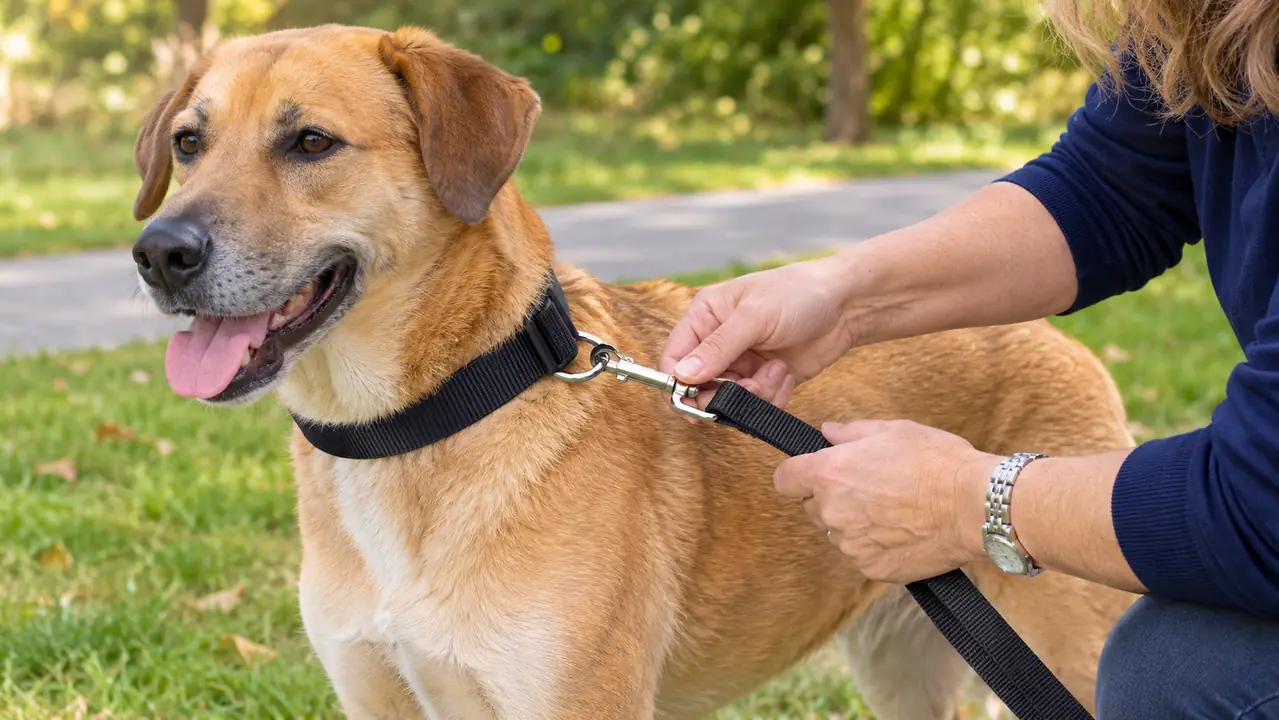
I clip it to the back ring of a plain flat collar, never to the chest ring of the harness. That was not my idea. Dr. Sellers, our vet, explained that clipping a long line to a front-clip harness puts a side load on the dog's shoulders at exactly the moment he hits the end of the line, and that is not a load you want on a 62-pound dog running. So, back ring, flat collar, every time.
The 15-footer that lives by my back door and does one job well
Hi Kiss makes this lead in 15, 20, 30, 50 and 100 foot lengths. I have only ever used the 15 foot, 3/4 inch nylon version, and that is the one I would buy again. The swivel bolt snap resists twisting, which matters more than you would think when the line is wet and your dog is circling.
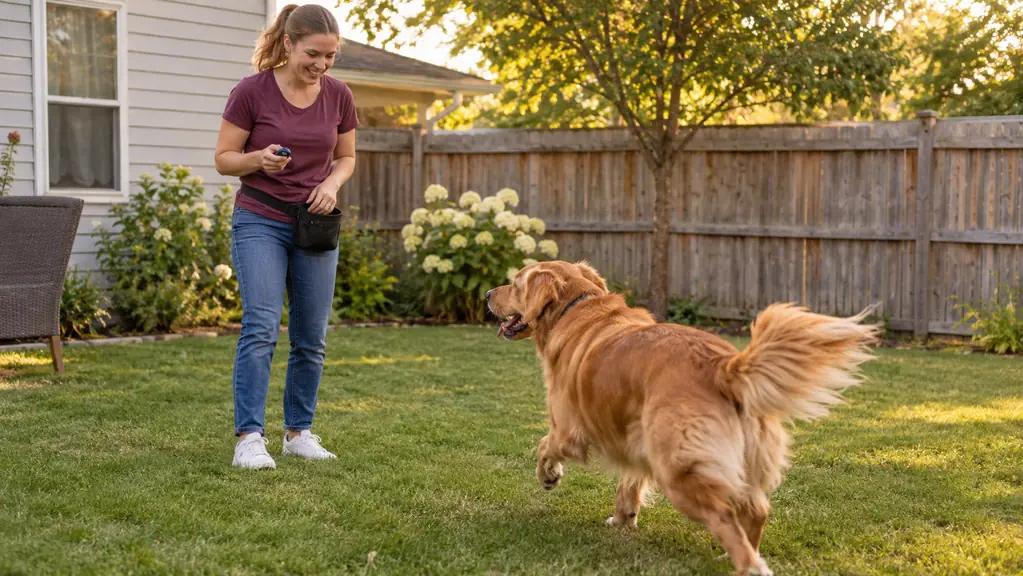
Amazon Check Today's Price on Amazon →The first eight weeks of practice happened in my own back yard, and they were not glamorous. I would stand in the middle of the grass with the treat pouch on my belt, wait for Biscuit to look at me, say his name once, and when he turned and came in I clicked and paid him. Small pieces of hot dog, cut about the size of a pencil eraser. Not kibble. Kibble is fine for the KONG. Coming back to me when there are squirrels involved deserved a better paycheck.
I use the clicker for new skills and I say "yes" for things he already knows. Biscuit connected the click with the treat in about three short sessions, which surprised me, because the two months prior to that had been me talking at a dog who was very clearly not listening. The clicker cost less than a bag of dog food and the pouch that carries the treats has been on my belt for 22 months now, holding about three cups, magnetic top, belt loop or clip. Before the pouch I used my coat pockets and ruined two good coats with crumbs, so I am not going to pretend the pouch is optional. It is not.
The line itself has one small physical fact worth knowing. Nylon that runs through your hands fast will burn them. I wear gloves. I have had the line snap tight across my fingers once when Biscuit bolted after a deer and once was enough to make me a permanent glove person. That is not a knock on the lead. Any 15-foot line of any material is going to do that. It is a knock on me for thinking my hands were tougher than they are.
The yard progress took about eight weeks before I would call it reliable. Reliable meaning he came back on the first call most of the time, not all of the time, and not when the mail truck was coming. The greenway took closer to five months, and it is still the harder of the two places. There are more smells out there, other people, other dogs, and about a hundred reasons for a Lab mix to ignore a woman standing in the grass saying his name.
When I got tired of being ignored, thanks to a hint I picked up from a trainer online, I would simply walk the other way while I called him, and my next CTA got a lot easier, because turning your back and moving off is very close to a dog's native language for "come along". It was not magic. It was just the right way to give that particular instruction, and when my dog saw me walking away from him, he came, though he looked personally offended about it.
I do not let Biscuit off the line in an unfenced area. Not at the greenway, not in the field at the end of the road, not anywhere. The 15-foot line is the freedom. If you are imagining that this article ends with me unclipping him and watching him run into the sunset, it does not end that way and it is not going to. He is a dog with prey drive and a nose, and I am a woman who likes knowing where he is.
I gave up a retractable leash before I bought this one. The retractable was always either locked or a thin cord under tension, and it taught Biscuit that hitting the end of the line was normal, which is the exact opposite of what I was working on. The Hi Kiss lead has no reel, no lock, no mechanism. It is a length of nylon with a snap on the end and it cannot teach him a bad habit because it has no moving parts to do it with.
What I'd Tell You If We Were Sitting at My Kitchen Table
I would tell you to buy the 15-foot, and only the 15-foot, unless you have a very good reason for something longer. Fifteen feet is enough room for a dog to feel like he is running and short enough that you can still reach him. A 30 or 50 foot line is a great way to watch your dog hit the end at full speed.
I would tell you the line does not do the work. You do the work. Eight weeks in my yard, five months at the greenway, twice a week most weeks, with better treats than he gets any other time of day. If you buy this lead and take it out once and let your dog drag you around a field in the rain, you will conclude it does not work, and you will be right, because you did not use it.
I would tell you to clip it to the back ring of a flat collar and put gloves on. I would tell you to keep the walk harness and the long line separate in your head, because they solve different problems and swapping them is how people get hurt. And I would tell you that the first time Biscuit came back to me across open grass with the line loose and slack in my hand, I stood there in the wind feeling foolish about how hard my eyes were stinging over a dog doing a thing dogs can do. I have had him for two years and ten months and we are still practicing.
Fifteen feet, 3/4 inch nylon, the only training lead I have used for eighteen months
If your dog pulls, the harness handles the walk. If your dog needs to learn to come back, this is the lead that lets you practice safely in open grass. Today's price on the 15-foot version is the one to look at.
Amazon Check Today's Price on Amazon →