
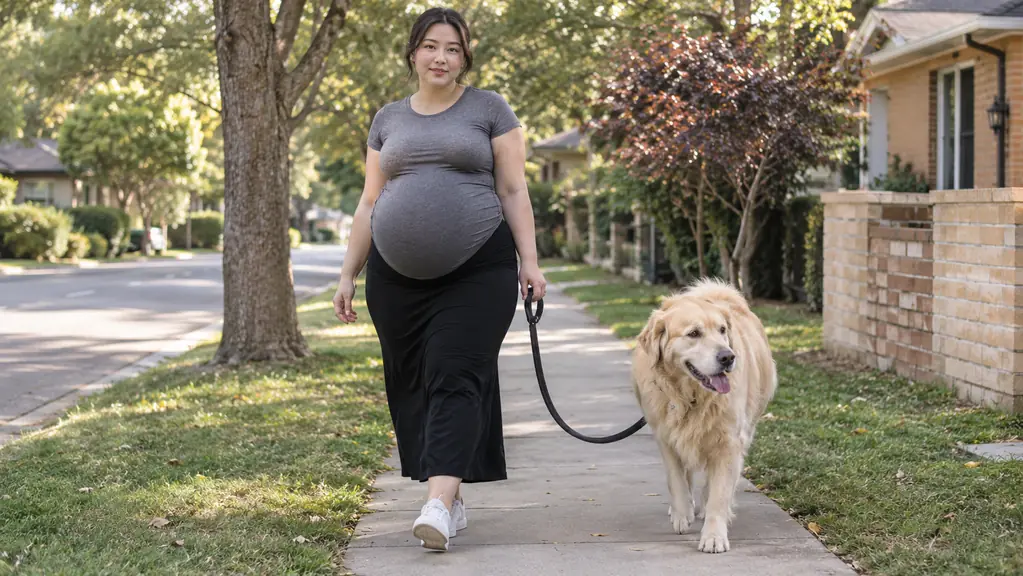
I bought the PetSafe Easy Walk Harness two years ago, on a Saturday morning when Biscuit, my 62-pound Labrador mix, dragged me across the parking lot at the greenway trailhead. He was two then, a shelter dog I had adopted at fourteen months, and he had already run through one back-clip harness that did nothing but give him something to lean into. My shoulder ached. My coffee sat in the truck cup holder getting cold. I remember thinking that I had driven a school bus for decades, and this dog was winning. The PetSafe Easy Walk was the first tool that changed the walk itself, not just the scenery. It did not turn Biscuit into a different dog. It gave me a way to keep us both steady while I taught him what I wanted.
Here is what I wish someone had told me at the start: a harness is not training. It is equipment. The Easy Walk is good equipment for a strong puller, and it made our twice-daily walks manageable in the first week. The manners still had to be taught with rewards, repetition, and a treat pouch on my belt. I am not a trainer. I am a retired school bus driver in Knoxville, Tennessee, with a fenced back yard and a dog who thinks every squirrel is a personal invitation. I can only tell you what happened in my house and on my street.
The Quick Verdict
A well-made management tool that made daily walks possible for my 62-pound puller, with honest limits.
Amazon Check Today's Price →The first harness that made our morning walk feel like a walk, not a tow
If your dog leans into the leash and you are tired of being dragged, start with the size that matches your dog's weight. For Biscuit, that was Large, rated for 50 to 100 pounds.
Amazon See Today's Price on Amazon →How I've Used It
I bought the PetSafe Easy Walk after the back-clip harness failed. Biscuit could brace against that old harness and pull harder, and I could feel it in my lower back by the end of the block. The Easy Walk changed the leverage. The first morning I put it on him, he lunged at a leaf pile and then stopped, surprised. He was not hurt. He was just not able to use his whole body weight against me the same way. By the end of the first week, our morning walk had gone from a wrestling match to a job I could finish.
The Large size is rated for dogs from 50 to 100 pounds. Biscuit was 62 pounds when I bought it, and he has stayed between 60 and 64 since. He is four now, and the Large still fits with the shoulder straps where I set them. I used the fitting guide that came in the box, then checked the straps again after a few walks. The quick-snap shoulder straps make it easy to put on, and the buckle closure is simple enough that I can do it in the dark of a winter morning. The harness is nylon, and the care label says hand wash only. I wash it in the utility sink with a little mild soap and hang it over the porch rail to dry.
One morning last March it was raining sideways and Biscuit spotted a cat under a parked car three houses down. He hit the end of the leash hard enough that I felt it in my wrist. The harness took the jerk across his shoulders instead of his throat, and he came back to me after a couple of seconds instead of dragging me into the neighbor's hedge. I stood there soaked through my jacket and thought, that is the whole job of the harness. Not a trained dog. A dog who cannot use his entire body weight against me.
We walk twice a day, usually a loop through the neighborhood and a longer stretch at the greenway. I use an ordinary six-foot leash, not a retractable. The harness is the only one I use now. It is not a cure. Biscuit still wants to greet every dog he sees, and he still forgets himself when a cat crosses the road. But the pulling eased in the first week, and by about week six our walks were calm enough that I could carry a treat pouch and reward him for the behavior I wanted. That is the part that made the difference for us: the harness kept him from dragging me while I taught him a better habit.
What the Martingale Loop Actually Does
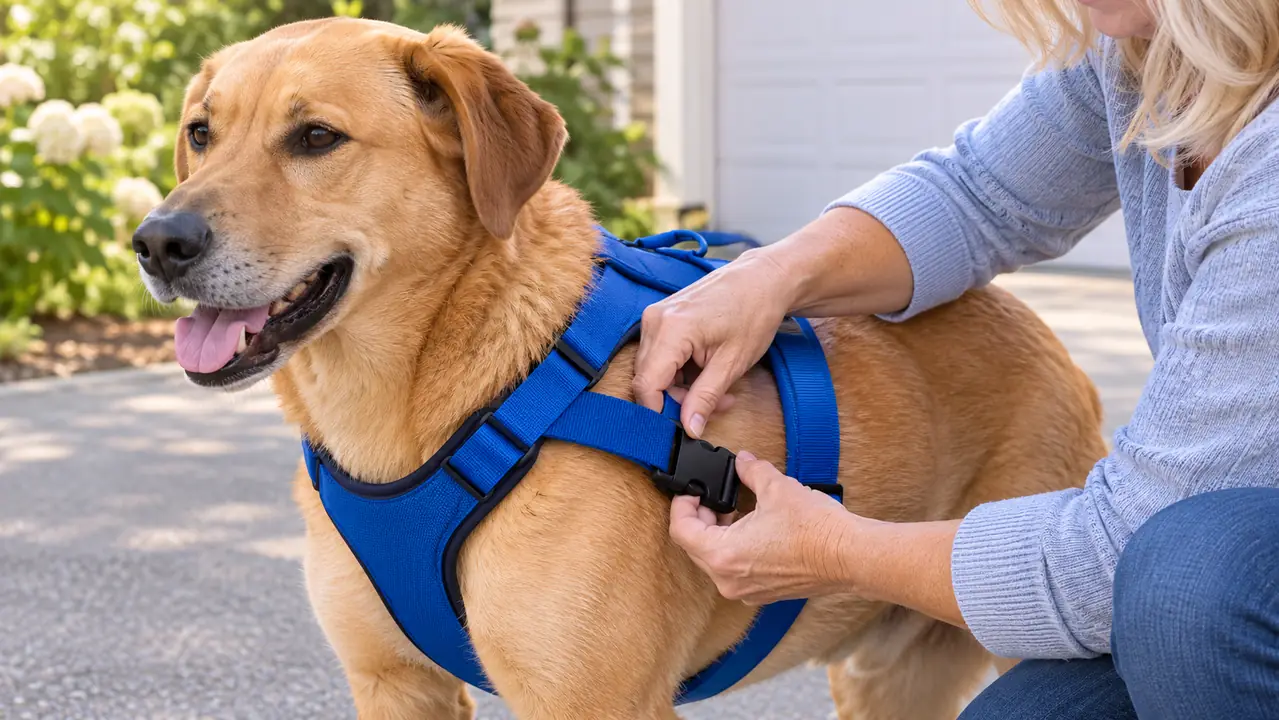
The Martingale loop is the part that does the work. It is a loop that sits across the shoulders. When Biscuit pulls, the loop tightens gradually and puts pressure on his shoulders. When he stops pulling, the pressure releases. That is the whole idea. It is not a choke collar and it is not a shock collar. It is a mechanical nudge that tells the dog, in a language he already understands, that the forward motion is not working.
I tested the loop in my driveway before our first real walk. I stood in front of Biscuit with the leash snug and took one slow step backward. The loop closed across his shoulders and he stopped, not because he was hurt but because the pressure told him the forward push was pointless. When I stepped toward him, the loop went slack again. That is the entire mechanism, and once I watched it happen I understood why the back-clip harness had failed us. That one let him lean his chest into the strap. This one does not.
PetSafe says the design was created by a veterinary behaviorist in 2004 and is used by a million pet parents. I cannot verify the million part, but I can tell you the design has been around long enough that my vet, Dr. Sellers, knew exactly what I was talking about when I mentioned it. The harness also has quick-snap shoulder straps and a belly strap, which makes it easier to fit than a lot of the strappy harnesses I looked at. The buckle closure is simple and has held up. The whole thing is nylon, and it has lasted two years of twice-daily use, mud, rain, and one unfortunate encounter with a burr patch.
I still check the straps before every walk. The Martingale loop only works if the harness fits correctly. If it is too loose, the dog can back out. If it is too tight, it rubs. The fitting guide in the box is useful, but I ended up adjusting the shoulder straps a half inch after the first week because Biscuit had lost a little weight. The belly strap is easy to tell apart from the shoulder straps, which helps you see which strap goes where, especially when you are kneeling in the driveway in the cold. That is a small thing, but it matters at six in the morning.
Fitting It Right Changed More Than I Expected
Fitting was the part I almost got wrong. I assumed that because Biscuit is a Lab mix, he would be a medium. The weight range on the Large is 50 to 100 pounds, and at 62 pounds he was solidly in the middle. The first time I put it on, the loop was too low and the shoulder straps were too loose. He walked a few steps and then stopped, and I could see the harness had shifted. I went back to the fitting guide, tightened the shoulder straps, and checked that I could fit two fingers under the loop. That was the difference between a harness that worked and a harness that rubbed.
I asked Dr. Sellers about the fit because Biscuit had a little bald patch under one front leg from the old harness. She said to check for rubbing after every walk for the first two weeks, and to wash the harness by hand if it got dirty, since dirt can make chafing worse. I did that. The bald patch grew back. The only time I have seen a rub since was when I left the belly strap a little too loose after a wash. I fixed it, and it did not come back.
Quick-snap shoulder straps make the harness easy to put on, but they also mean you need to check that both sides are snapped before you clip the leash. I have caught myself once or twice walking out the door with one side unsnapped. Biscuit did not get loose, but I would not trust it. Now I do a quick check in the hallway mirror before we leave. It takes five seconds and saves me a bad morning.
The First Six Weeks, Week by Week
Week one was not perfect. Biscuit still pulled, but he could not get his full weight into it. I kept the walks short, maybe fifteen minutes, and I rewarded him with a piece of kibble every time he looked back at me. The harness gave me enough control to do that. Before, I was too busy bracing to reward anything.
Weeks two and three were about fit and habit. I adjusted the shoulder straps again, washed the harness once, and started using a treat pouch on my belt so I did not have to dig in my coat pocket. I also started practicing turns in the driveway. When Biscuit hit the end of the leash, I stopped. When he turned back, I rewarded him and we moved on. The harness made the stop possible. The reward made the turn worth doing.
Somewhere in week three I started carrying the treat pouch on my belt instead of stuffing kibble in my coat pocket. It has a magnetic opening and holds up to three cups, and I could pull a reward out with one hand while the leash stayed in the other. That sounds like a small thing. It was not. For the first two weeks I was fumbling in a zipped pocket with cold fingers, and by the time I got a treat out Biscuit had already forgotten what he had done right. The pouch fixed the timing. The timing is most of the training.
By week four, I noticed that he was checking in more often. By week six, we could walk past the neighbor's barking terrier with the leash hanging in a loose J instead of a taut line. That was not because the harness trained him. It was because the harness kept him from rehearsing the pull while I taught him what to do instead. I still use the harness every day. I still reward him on most walks. The two things work together.
What It Does Not Fix
The Easy Walk does not fix barking, jumping, or the mail truck. Biscuit still barks at the mail truck. He still thinks every visitor is there to see him. The harness is for the walk. If your dog is reactive to other dogs, the harness may help you keep control, but it is not a treatment plan. I would talk to a trainer or your vet about that, not just buy a harness and hope.
It also does not replace training. If you put it on and expect the pulling to stop forever, you will be disappointed. The pulling eased because the harness made pulling less effective and because I rewarded the behavior I wanted. When I got lazy about rewards, Biscuit got sloppy. The harness is a management tool. It buys you enough calm to teach. It is not a cure, and I would not trust any product that promised to be one.
What I Liked
- The Martingale loop puts gradual pressure on the shoulders and releases when the dog stops pulling.
- The Large size fits dogs from 50 to 100 pounds, which was right for Biscuit at 62 pounds.
- Quick-snap shoulder straps and a buckle closure make it fast to put on.
- The nylon material has held up to two years of daily walks and hand washing.
- The fitting guide in the box helped me get a safe fit.
- It comes with a 1-year limited warranty.
Where It Falls Short
- Hand wash only, so it is not as easy to clean as a harness you can throw in the machine.
- It is a management tool, not a cure for pulling.
- The fit has to be checked often, especially if your dog's weight changes.
- The belly strap can pick up burrs on wooded paths.
- If your dog is outside the 50 to 100 pound range, this size is wrong.
By week six, Biscuit could walk past the neighbor's barking terrier with the leash hanging in a loose J instead of a taut line.
Who This Is For
This harness is for someone with a strong puller who is willing to do two things: fit the harness correctly and reward the dog for walking nicely. It suits dogs in the 50 to 100 pound range, especially dogs who lean into a back-clip harness and turn it into a sled dog routine. It suits people who walk every day and want a tool that makes the walk steadier while they train. It also suits older owners or anyone with shoulder or back trouble, because the leverage change is real. I am 58 and I noticed it by the second walk.
I would add one more thing. This harness suits someone who walks the same route every day and pays attention. Most of what I know about Biscuit came from seeing him meet the same corner, the same mailbox, and the same barking terrier over and over. A harness you use twice a day teaches you things a harness you use twice a month never will.
Who Should Skip It
Skip this exact size if your dog is under 50 pounds or over 100 pounds. Skip it if you want a harness that does the training for you, because it will not. Skip it if your dog has a shoulder injury or a skin condition and your vet has not cleared a harness that puts pressure across the shoulders. Skip it if you are looking for a tie-out or a car restraint, because this is a walking harness. And skip it if you are not willing to hand wash it. I am not saying that to be fussy. The care instructions are clear, and a dirty harness can rub.
If your dog is already dragging you, start with the right size
The PetSafe Easy Walk was the tool that let me teach Biscuit without getting yanked off my feet. Check the weight range, use the fitting guide, and give it a few weeks with rewards.
Amazon See Today's Price on Amazon →