
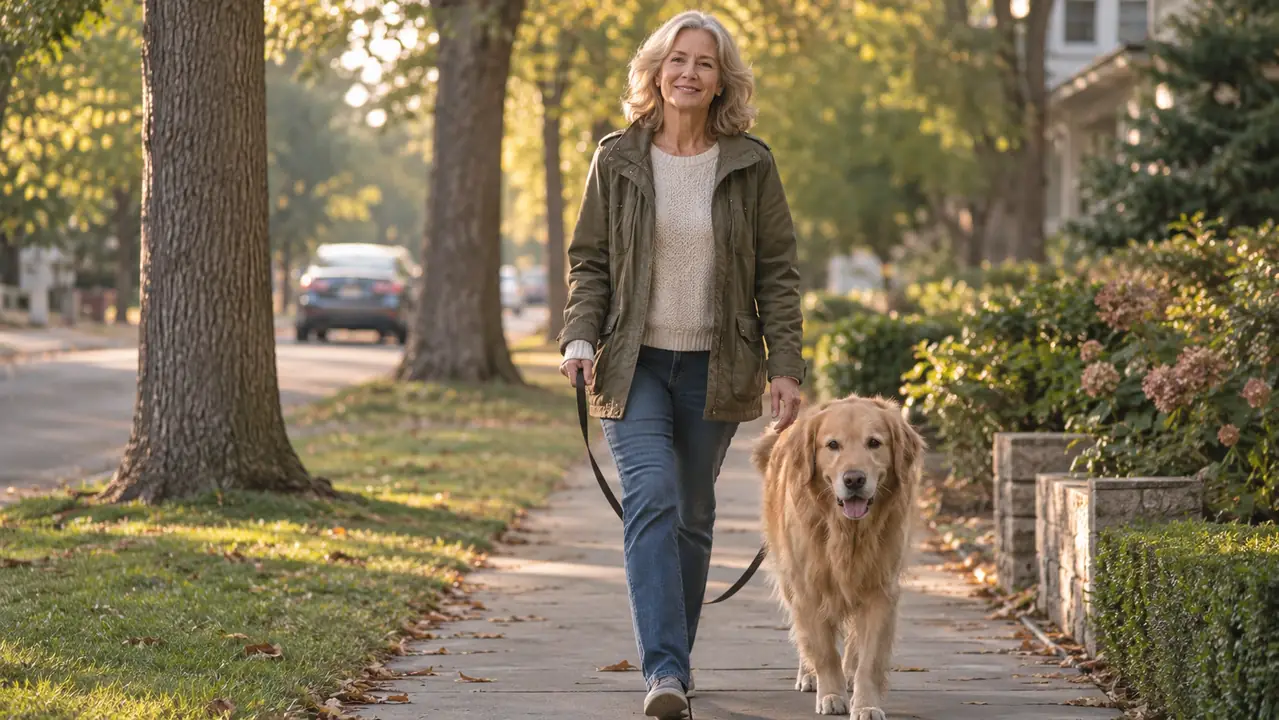
My right shoulder ached every evening for most of one summer, and it had nothing to do with the decades I spent behind the wheel of a school bus. It came from a 62-pound Labrador mix named Biscuit, and the four blocks between my front door and the corner. That stretch of sidewalk is where a PetSafe Easy Walk Harness finally ended ten months of tug of war.
Biscuit came home from the shelter at fourteen months old already knowing how to pull. He was not mean about it. He was joyful about it. Every smell on the far side of the street was a reason to lean into the leash, and I was the thing he dragged along behind him like a grocery cart with a bad wheel.
Neighbors crossed the road when they saw us coming. A woman on the next block once suggested, kindly, that I might try one of those no-pull harnesses. I already had a harness. That is the part nobody explains about a back-clip model: it is comfortable for the dog and it does nothing about the pulling, because the pressure lands across his back and he simply leans harder into it.
Before that I tried other things. A slip lead I hated after a single walk, because it tightened on his throat and made him cough. A retractable leash that turned my wrist into a rope burn and taught him the sidewalk is a contest. Treats loose in my coat pocket, which ruined two good coats and left crumbs in the laundry for a year.
What finally changed things started as a question for Dr. Sellers, our vet, who has known Biscuit since the week I brought him home. I asked whether a harness that clips at the chest would be easier on his throat than what we had. She said yes, and then she said the harness by itself would not teach him anything. It would only take the fight out of the walk. The teaching was going to be mine.
So two years ago I bought the PetSafe Easy Walk Harness in a size Large, cut for dogs from 50 to 100 pounds. Biscuit runs 62, so he sits in the middle of that range. It is nylon, it closes with an ordinary buckle, and the quick-snap straps at the shoulders let me get it over his head without a wrestling match.
By week six I could carry a coffee in my left hand. That is the whole review, really.
Two years later, it is still the only harness on the hook
The Easy Walk clips at the chest, so a dog who leans forward turns himself back toward you instead of dragging you down the block. Size Large fits dogs from 50 to 100 pounds, and the belly strap in the contrasting color is the fastest way to get the fit right the first time.
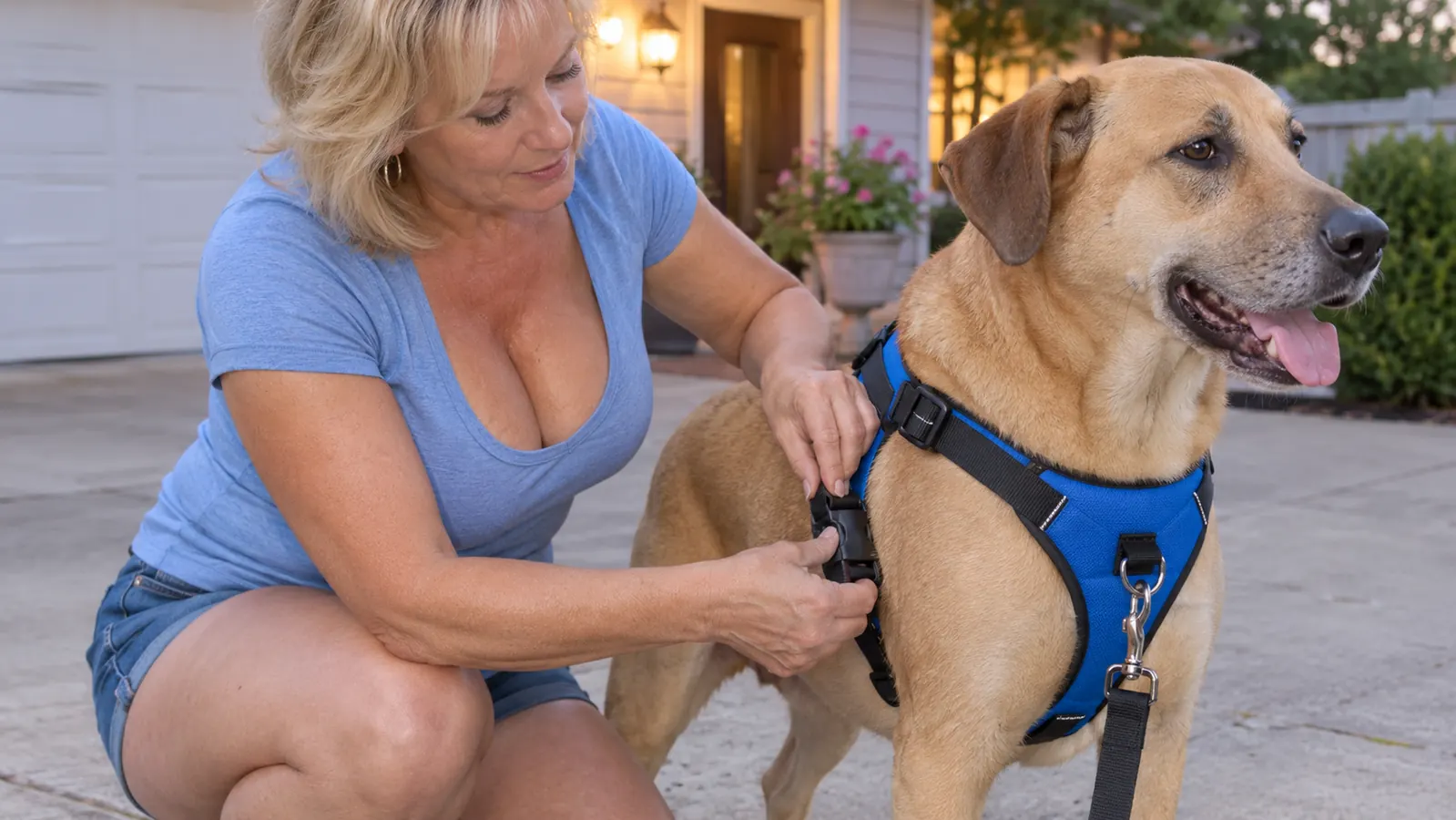
Amazon Check Today's Price on Amazon →The fitting took two tries and one early morning in the driveway with the porch light on. The strap that runs under the belly is a different color from the rest, which sounds like a small thing until you are crouched down at six in the morning trying to work out which strap goes where. That color contrast is most of the fitting guide. Once I had it right, the chest strap sat low across his breastbone instead of his throat, and the martingale loop at the front gathered a little when he pulled and let go the instant he stopped.
The first walk was not a transformation. He still hit the end of the leash at the first fire hydrant. What was different was what happened next. Instead of me planting my heels and hauling backward, the front clip turned him slightly toward me, and the pulling stopped being something I had to overpower. By the fourth or fifth day he was checking in with me at the corners without being asked. Not out of respect. Out of the simple fact that leaning forward no longer got him anywhere.
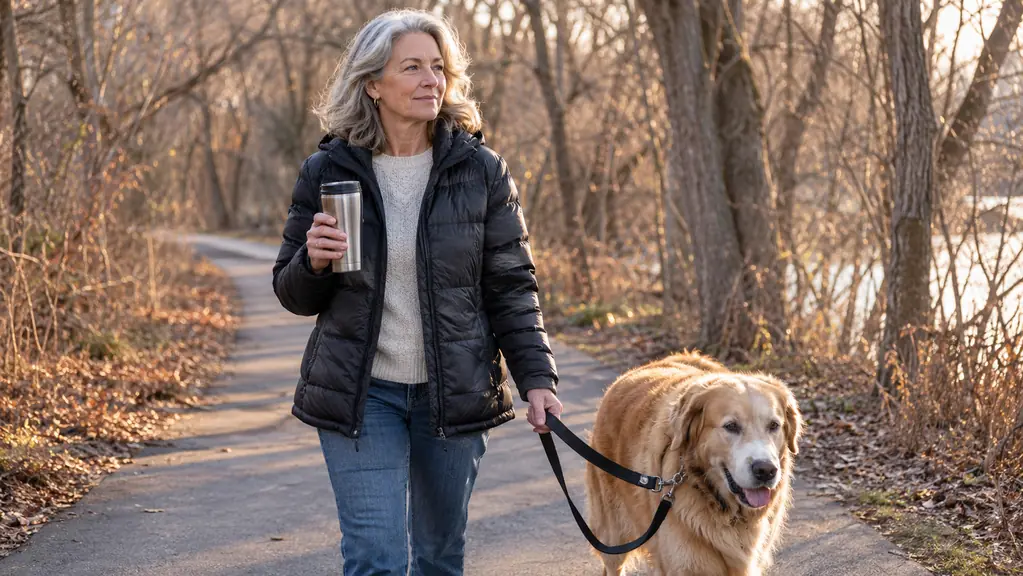
By about week six the walks had gone quiet. I noticed it on a Tuesday, coming back up the hill with a coffee in my left hand, which I had not been able to do since the day I brought him home. That is the honest measure of it. Not a dog who heels perfectly. A dog I can walk with one hand and a warm cup.
I want to be careful about what this harness is. It is a management tool, not a cure. Biscuit still wants to greet every other dog on the greenway, and when a squirrel breaks for the far side of the road, the front clip buys me a second and a half, nothing more. What it did was take the daily fight out of the walk so the training had room to land. When I wanted to teach him something new, I used the clicker and the treat pouch. The PetSafe harness kept us both calm enough to practice.
Two years on, it is still the only harness on the hook by my door. I hand wash it, which is what the label asks for, and it has come through two Knoxville summers and one very muddy February. It carries a one year limited warranty and I have not needed it. The buckle has never slipped. The straps have never frayed. The only wear is on the chest pad, where Biscuit leans when he thinks we are going somewhere interesting.
What I'd Tell You If We Were Sitting at My Kitchen Table
If you were at my kitchen table with a cup of coffee and a dog who pulls your arm out of the socket twice a day, here is what I would say. Measure the dog before you order, and put the thing on correctly, with the chest strap low and the belly strap where it belongs. A front-clip harness that sits too high will rub, and then you will blame the harness for a fitting problem. Then give it a week before you decide. The first walk is not the test. The tenth is.
And this is the part I got wrong for months. The harness does the managing, but it does not do the teaching. Have something in your pocket that your dog actually wants, mark the moment he turns back toward you, and pay him for it. I keep a treat pouch on my belt and a clicker on my wrist, and the three of them together are what turned our walks around. The harness bought me the calm. The timing and the treats did the rest.
If your shoulder aches by the end of the block, start with the fit
Large fits dogs from 50 to 100 pounds. Put it on with the chest strap low and the belly strap in the contrasting color where it belongs, then give it a week of ordinary walks before you judge it.
Amazon Check Today's Price on Amazon →