
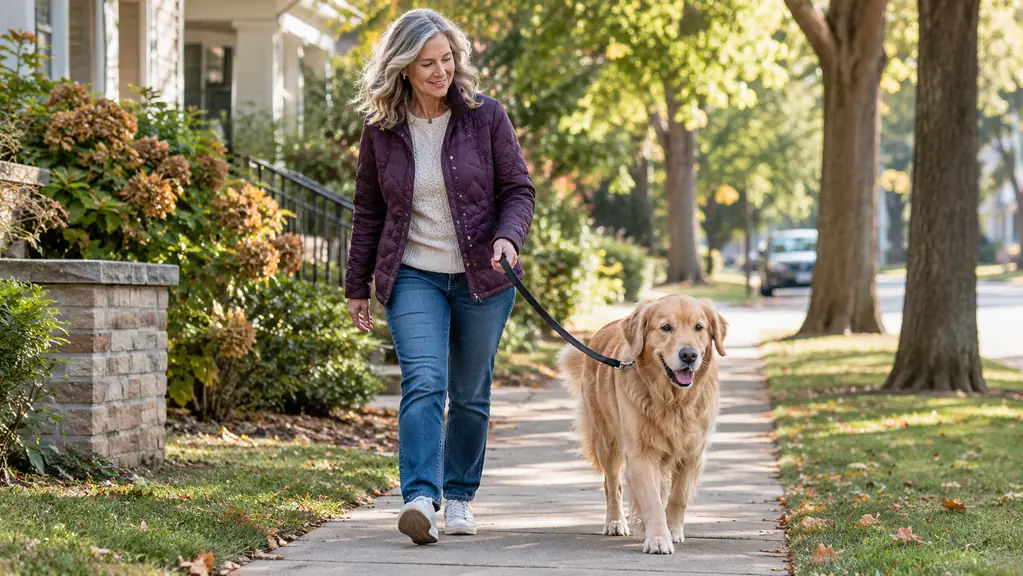
I am not a trainer. I am a retired school bus driver in Knoxville, Tennessee, and I have one dog, a 62-pound Lab mix named Biscuit. He came home from the shelter at 14 months old with a hard pull and no plan. He is four now. I tried a back-clip harness first because it looked simple. It did nothing for the pulling. Two years ago I bought the PetSafe Easy Walk Harness in Large, and it is still the only harness I use on our twice-daily walks.
This is not a lab test. It is a comparison between the harness that changed our walks and the back-clip style I see on most dogs in my neighborhood. I am using the Julius-K9 IDC Powerharness as the back-clip example because it is a well-known design with a single back attachment. The short answer is simple. For a dog that pulls, the PetSafe Easy Walk Harness does the better job. For a dog that already walks politely, a back-clip harness can be the easier choice.
| PetSafe Easy Walk Harness | Julius-K9 IDC Powerharness | |
|---|---|---|
| Leash attachment | Front chest clip with a martingale loop across the chest | Single back clip |
| Pulling control | Turns forward pull into a gentle sideways cue | Leaves the dog's strength aimed straight ahead |
| Fit details | Quick-snap shoulder straps and a belly strap in a different color, sized for 50 to 100 pounds | Over-the-head design with chest and belly straps |
| Long-line or hiking use | Front chest clip is not the right attachment for a long line | Back clip gives a clean attachment for a long line |
| Care and warranty | Nylon, buckle closure, hand wash only, one year limited warranty | Washable synthetic construction, no stated warranty length in the listing |
| Best for | A dog that pulls on daily neighborhood walks | A dog that already walks politely, or hiking and tracking |
How I Compared Them
I did not run a clinical trial. I used the Easy Walk on Biscuit for two years, twice a day, on an ordinary six-foot leash. Before that I tried a different back-clip harness for several months after I brought him home. It did not stop the pulling. For this piece I am using the Julius-K9 IDC Powerharness as the back-clip example because it is a common design with a back attachment, and I have walked a neighbor's calm dog in one. That is enough to compare how the two designs ask a dog to move.
What I watched for was not whether the dog looked cute in the harness. I watched the leash. When Biscuit hit the end of it, did he keep leaning forward, or did his body turn? Did he cough? Did the harness rub behind his front legs? Could I get his attention with a treat while he was wearing it? Those are the questions that matter on a real walk, not the ones on a spec sheet. A harness can look sturdy and still make a pulling dog worse if it gives him something to lean into.
I also watched how the harness went on and off. Biscuit does not stand still in the driveway. He wants to sniff the same bush every morning, and he wants to sniff it before I have finished buckling anything. The Easy Walk has quick-snap shoulder straps and a belly strap that is easy to tell apart from the shoulder straps, so I can see which strap goes where without turning the harness over in my hands. The back-clip harness I tried first was one piece over the head. It was not hard, but it was more of a production. On a rainy morning, small differences count.
I kept a small notebook for the first month of the Easy Walk because I wanted to know whether I was fooling myself. I wrote down the route, the time, and whether Biscuit pulled hard, pulled a little, or walked slack. Our route is the same loop every morning, about half a mile, out to the corner and back. In the first seven days I counted eleven hard pulls on that loop. In the third week I counted four. By the sixth week I went three mornings in a row without writing down a single hard pull, and I stopped keeping the notebook. That is not science. It is a record one person can honestly keep.
Where the PetSafe Easy Walk Harness Wins
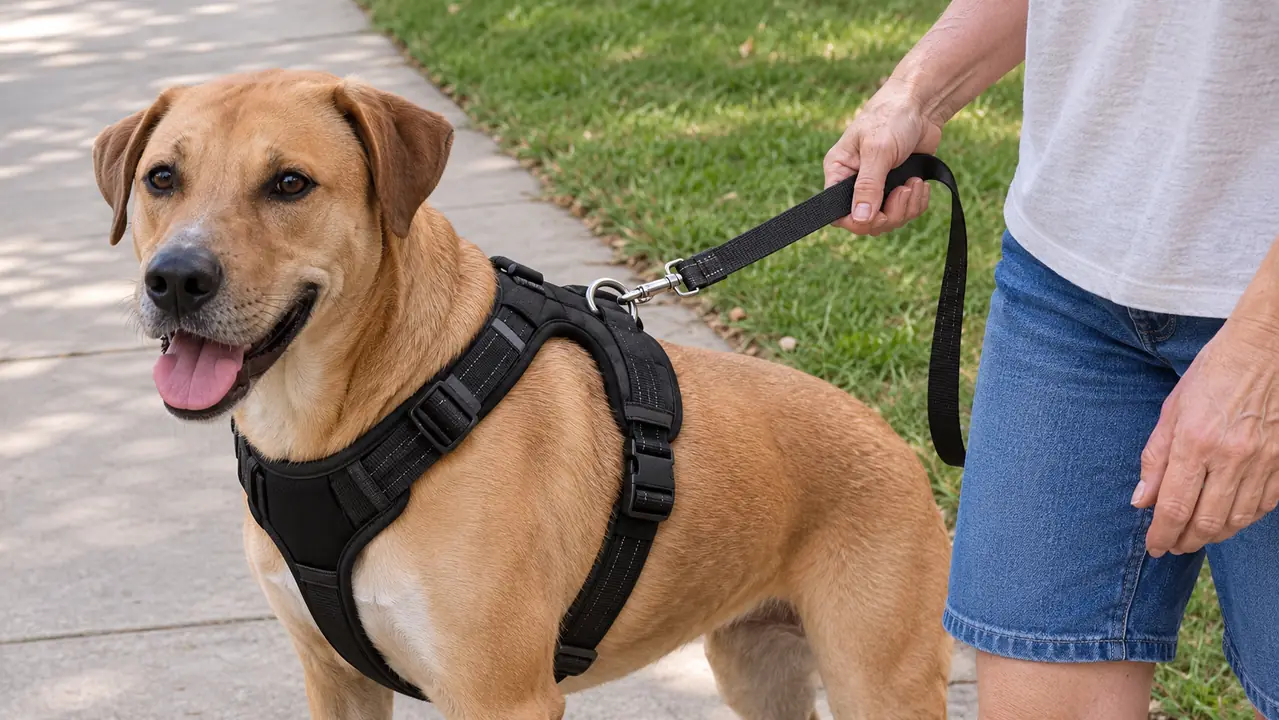
The Easy Walk wins on the thing that made me buy it: the pull. The leash attaches at the front of the chest, and the martingale loop puts gradual pressure on the shoulders when Biscuit leans forward. That pressure is not a correction. It is a cue. When he hit the end of the leash, his body turned toward me instead of charging ahead. The first week was not perfect. He still pulled, but I could stop it with an ordinary six-foot leash and a treat in my hand. By about week six, our morning walk was a walk, not a tow.
The fit is the second reason. The Large is sized for 50 to 100 pounds. Biscuit is 62 pounds, and the Large fits with room to adjust. I had the shoulder straps snug and the belly strap a little looser, which is what the fitting guide that comes in the box walks you through. The quick-snap shoulder straps make it easier to put on a dog that does not stand still. The belly strap is easy to tell apart from the shoulder straps, which sounds small until you are trying to find the right strap in the dark on a winter morning. It is nylon, it closes with a buckle, and it is hand wash only. It carries a one year limited warranty, and I have not had to use it. I wash it in the kitchen sink with mild soap and hang it over the back of a chair.
There is one thing I got wrong at first, and it cost me two weeks. I had the chest strap too loose because I was worried about rubbing. A loose strap slides to one side when the dog pulls, and a harness that slides does not cue anything. I tightened it the way the fitting guide shows, checked it with two fingers underneath, and the turning started working the way people describe. If you try the Easy Walk and it does nothing, check that before you decide the design failed. My first two weeks were my fault, not the harness's.
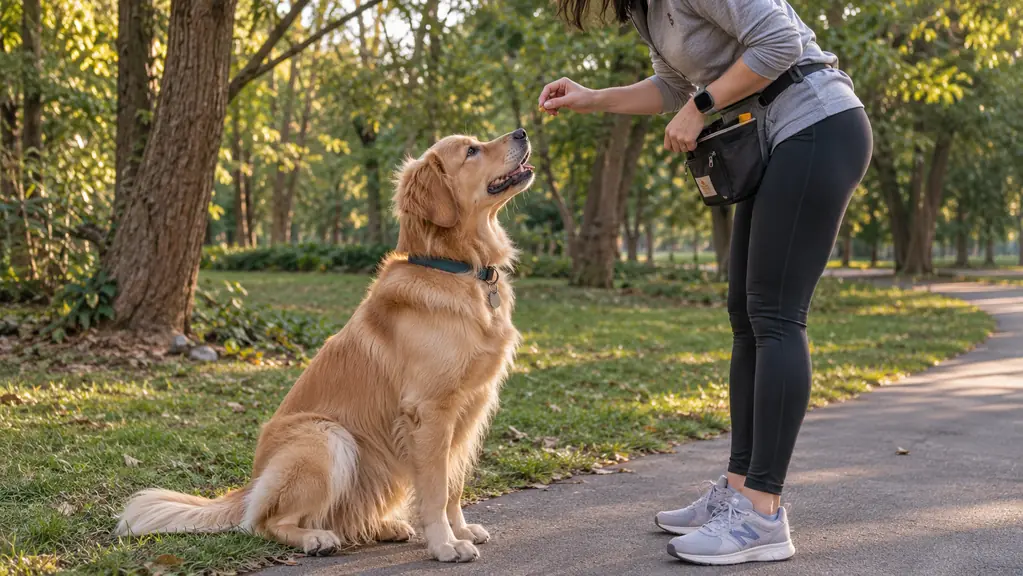
What the Easy Walk does not do is train your dog for you. I still carry treats. I still use the clicker for new behaviors and say yes for things Biscuit already knows. The harness gave me a dog I could train on a loose leash instead of a dog I was always dragging away from a squirrel. That is the honest limit. If you put it on and expect the pulling to vanish, you will be disappointed. If you use it while you reward the behavior you want, it earns its place by the door.
By week six, Biscuit could walk past the mail truck with the leash hanging slack. The harness did not train him. It gave me a dog I could train.
Where the Julius-K9 IDC Powerharness Wins
The Julius-K9 IDC wins on long-line work and on dogs that already walk well. A back clip keeps the leash behind the dog's shoulders, which is where you want it for hiking, tracking, or a long line in open grass. The front clip on the Easy Walk is not the place for a 15-foot line. I use a long line for recall practice, and I clip it to the back ring of Biscuit's flat collar, never to the chest ring of the harness. If your dog is calm and you want one harness for trail walks, a back clip makes sense.
The back-clip harness also wins on simplicity. There is no front strap to manage and no martingale loop to adjust. For a dog that has already learned not to pull, that is less hardware to check before every walk. I have walked with a neighbor whose dog heels beside her in a back-clip harness, and the dog is fine. The harness is not the problem. The problem is a dog that has not been taught what to do when the leash tightens. A back clip lets a strong dog lean into the pull. That is the trade.
There is a second back-clip advantage worth knowing. On a wide path, a back clip keeps the leash out of the dog's front legs. The front-clip design puts the leash in exactly the spot a dog steps into when he turns, and I have had to untangle a front clip more than once on an open path. That is not a reason to walk a pulling dog on a back clip. It is a reason to own the right tool for the open-grass job.
I am not going to call the Julius-K9 a bad harness. It is a sturdy back-clip design, and for the right dog it is a good piece of gear. It lost this comparison for one reason: it did not stop Biscuit from pulling. If your dog already walks on a loose leash, you do not need the front clip. If your dog drags you to the mailbox, the back clip is not the tool that fixes it.
If your dog leans into the leash, start with the front clip
The PetSafe Easy Walk Harness is the one I still buckle on Biscuit twice a day. It will not train your dog by itself, but it gives you a walk you can train inside of. Start with short walks and reward the slack.
Amazon See the Easy Walk Harness on Amazon →Who Should Buy Which
Buy the PetSafe Easy Walk Harness if your dog is between 50 and 100 pounds, pulls on a normal leash, and you walk the same route every day. It is also the better pick if you are willing to carry treats and reward the moments when the leash goes slack. I would not buy it for a dog that panics when a strap crosses the chest, and I would not buy it as a cure for reactivity. It is a management tool. Biscuit still has opinions about the mail truck. The difference is that I can get his attention now.
If you are on the fence about size, measure the dog's chest rather than guessing by his weight. Biscuit was 62 pounds when I bought the Large without needing a different harness, because the straps had room in them. The Large covers 50 to 100 pounds, and that range is wide for a reason. Check the fitting guide that comes in the box before you decide the size is wrong. A harness that is too big slides, and a harness that slides will not do the one job you bought it for.
Buy the Julius-K9 IDC or another back-clip harness if your dog already walks politely, if you spend more time on trails than sidewalks, or if you need a back attachment for a long line. It is also the simpler choice for a dog that is comfortable in a back-clip harness and does not need steering. If you are between the two, borrow one from a friend for a week. Watch what happens when the leash tightens. That will tell you more than any chart.
The harness that made our morning walk a walk again
If you are tired of being towed, try the PetSafe Easy Walk Harness for a week of normal walks. Keep treats in your pocket and reward the moments when the leash goes slack.
Amazon See the Easy Walk Harness on Amazon →