
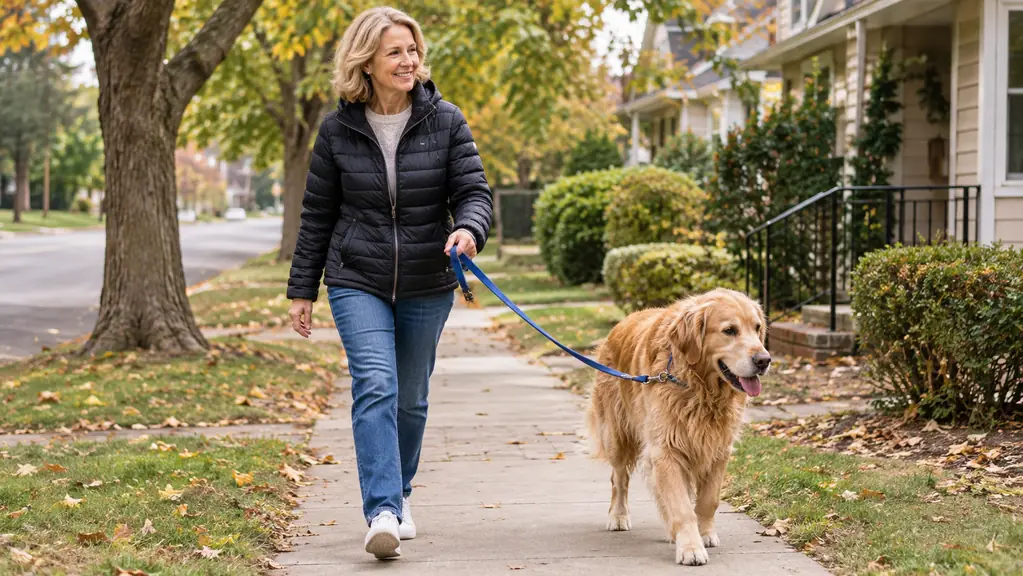
I bought the PetSafe Easy Walk Harness two years ago because my Labrador mix, Biscuit, was turning every walk into a tug-of-war. He was two years old, sixty-two pounds, and strong enough to pull me off the sidewalk when a squirrel broke cover. A back-clip harness had done nothing except make the pulling feel smoother. The Easy Walk was the first front-clip harness I tried, and I want to be clear about what it did and did not do in our house. I am not a trainer. I am a retired school bus driver with a fenced back yard and a dog who needed more exercise than my shoulder could handle.
This is an honest review, not a victory lap. The harness helped. It did not fix everything, and it will not fit every dog. If you are looking for a piece of equipment that teaches a dog to stop pulling while you stand there, this is not it. If you want a tool that gives you a little more control while you teach him, keep reading. The short version is that the Easy Walk made our walks possible again, but it did not make them perfect.
The Quick Verdict
A front-clip harness that gave me control on daily walks, but it is a management tool, not a cure for pulling, barking, or jumping.
Amazon Check Today's Price →If your arm is tired before the walk even starts, start here
The Easy Walk is the tool that let me stop hanging on and start rewarding Biscuit for walking beside me. It is not training by itself. It is the breathing room I needed to train.
Amazon Check Today's Price on Amazon →How I've Used It
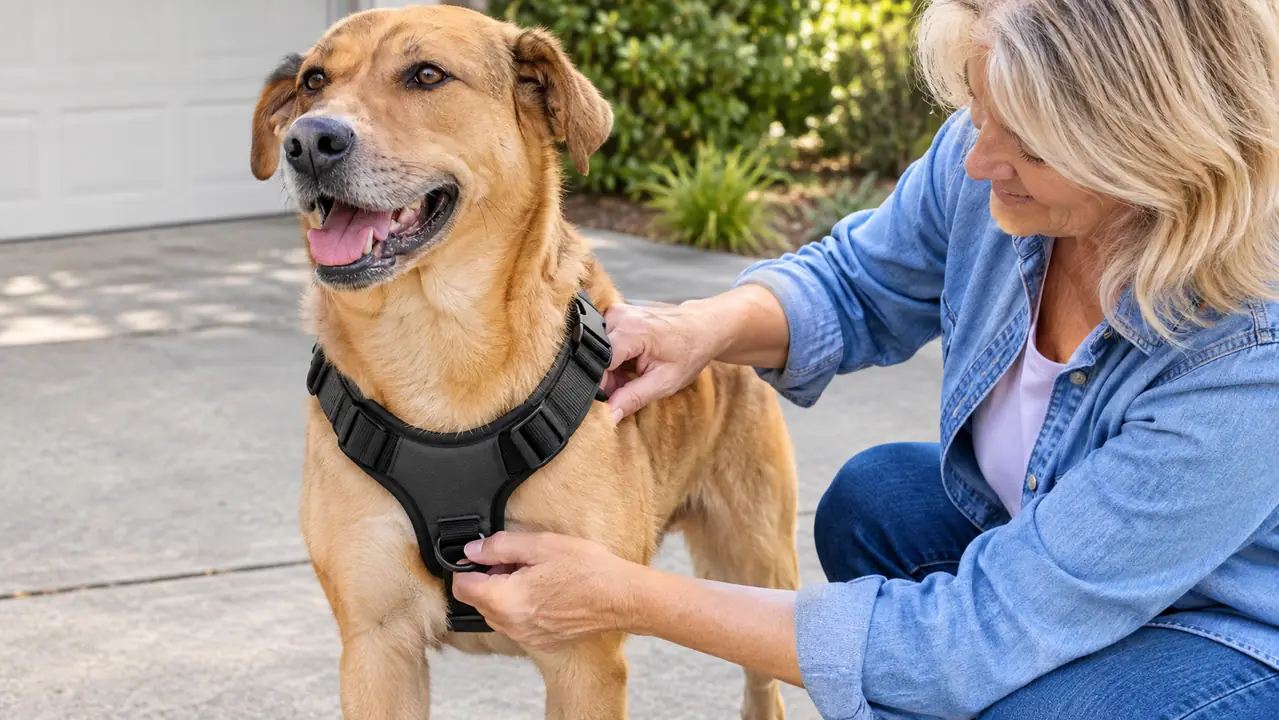
I bought the Large because Biscuit was sixty-two pounds and the size is rated for dogs from fifty to one hundred pounds. The fit took me two tries. The quick-snap shoulder straps and the buckle closure are simple enough, but the chest strap has to sit across the chest, not across the throat. I put it on him in the kitchen the first time, checked that I could slide two fingers under the strap, and had Dr. Sellers look at it at his next appointment. She told me to watch for rubbing behind the front legs, which I did for the first month.
We walk twice a day, usually a loop through the neighborhood and a longer stretch at the greenway on weekends. The harness goes on with an ordinary six-foot leash, clipped to the front chest ring. I do not use it with a retractable leash. I used one for a few months and hated the constant tension, and a front-clip harness works better with a plain leash anyway. The nylon is easy to wipe down, but the care instructions say hand wash only, so I wash it on a Saturday morning and let it dry on the porch. I do not put it in the dryer.
I bought it after a back-clip harness failed. That harness was comfortable, and Biscuit did not mind wearing it, but it gave him something to lean into. A front-clip harness does the opposite. The leash attaches at the chest, so when he pulls, his front end comes toward me instead of away. I did not understand that until I saw it on him. The first time he hit the end of the leash, his shoulder turned and he stopped. That was the whole reason I kept using it.
Two years in, the harness is still the only one I use. The martingale loop has not stretched out. The buckle still clicks. The quick-snap straps still hold. I have replaced the leash, not the harness. That is not a claim that it will last forever for every dog. It is what happened with a sixty-two-pound dog who walks about an hour a day. The one-year limited warranty is there, but I have not needed to use it.
Putting it on took practice. Biscuit was patient, but he was not thrilled about anything going over his head. The quick-snap straps help, and the belly strap is easy to tell apart from the chest strap. I still lay it out on the floor in the same shape before I call him. That little routine keeps him from backing away. If your dog hates handling, go slower than I did.
I also learned to take the harness off before Biscuit gets in the car. It is not a car restraint, and I do not want him tangled in the seat belt. That is not a knock on the harness. It is just a reminder that it is made for walking. I keep a plain collar on him for tags and use the harness only for walks.
What It Actually Does
The front chest clip changes the math. When Biscuit pulls forward, the leash pulls him slightly to the side instead of letting him lean into the pressure. The martingale loop adds gradual pressure across the shoulders, and he tends to slow down instead of digging in. It is not a cure and it is not training. It is a steering aid. The first week, I could feel the difference on the sidewalk. He still wanted to pull, but I could redirect him without planting my feet and hauling backward. The PetSafe design has been around since 2004, created by a veterinary behaviorist, and I understand why it stuck.
The martingale loop is the part I had to understand before I trusted it. It is not a choke collar. It is a loop that tightens a little when the dog pulls, then relaxes when he stops. On Biscuit, it was enough to get his attention without making him cough. I checked the fit every time for the first month. If the loop is too loose, it does nothing. If it is too tight, the dog is uncomfortable. The fitting guide that comes with the harness is worth reading.
The part nobody tells you is that a front-clip harness can make a dog walk a little crooked at first. Biscuit had to learn to keep his feet under him. He zigged toward the grass, then zagged back. A friend who walks a strong dog told me her dog did the same thing for about a week. I kept the walks short and boring and rewarded him with a treat when the leash went slack. The harness gave me the split second I needed to do that.
It also does not stop a dog from pulling toward something he really wants. If Biscuit sees another dog, he can still lunge. The harness gives me a better chance to turn him around, but it does not erase the reaction. That is why I still carry treats and still practice a turn away from the trigger. The harness is the seat belt, not the driving lesson. It keeps the walk safer while you teach the dog what to do instead.
Where It Fell Short for Us
The biggest thing the Easy Walk does not fix is the dog's brain. Biscuit still barked at the mail truck. He still jumped on guests. He still needed to learn how to walk politely, and the harness did not teach him that. For the first month, I treated the harness like a solution. I clipped it on and expected the pulling to stop. It did not. The pulling eased because the harness made it harder for him to drag me, not because he had decided to walk nicely.
The fit needs checking more often than I expected. If I left the belly strap a little loose, the harness shifted when Biscuit pulled. If I left the chest strap a little loose, the front ring dropped too low. The belly strap is easy to spot, but it does not solve a loose fit. I check the straps every few walks, especially after he has rolled in the grass. Hand wash only means you cannot just throw it in the machine after a muddy walk.
It also will not fit every dog. The Large is rated for fifty to one hundred pounds, and Biscuit is near the lower end of that. A smaller dog would need a different size. A dog with a deep chest or a narrow chest may need help from someone who knows how to fit a harness. I did not guess. I asked the vet, and I watched a short fitting video twice. If you are not willing to do that, the harness can rub or slide.
One more thing. The harness did not make Biscuit love the mail truck. It did not make him a calm dog on a busy street. It made our daily walk manageable. That is a smaller promise than the product page makes, but it is the true one in my house. If you need a dog who ignores other dogs, that is training, not hardware. The harness also did not solve the jumping. Biscuit thought every visitor was a party. I worked on that separately, with treats and a mat by the door. The harness has nothing to do with it. I mention it because it is easy to buy a harness and expect all the manners to arrive with it. They do not.
The Easy Walk did not teach Biscuit to stop pulling. It gave me enough control to start teaching him.
What Changed After Six Weeks
The pulling eased in the first week. I noticed it on the third walk. He still pulled, but the leash was not tight the entire time. By about week six, our regular loop felt calm. He walked on a loose leash for most of it. He still had bad days. A new dog on the route could set him off. But the baseline changed. I could walk him and enjoy it, not just survive it.
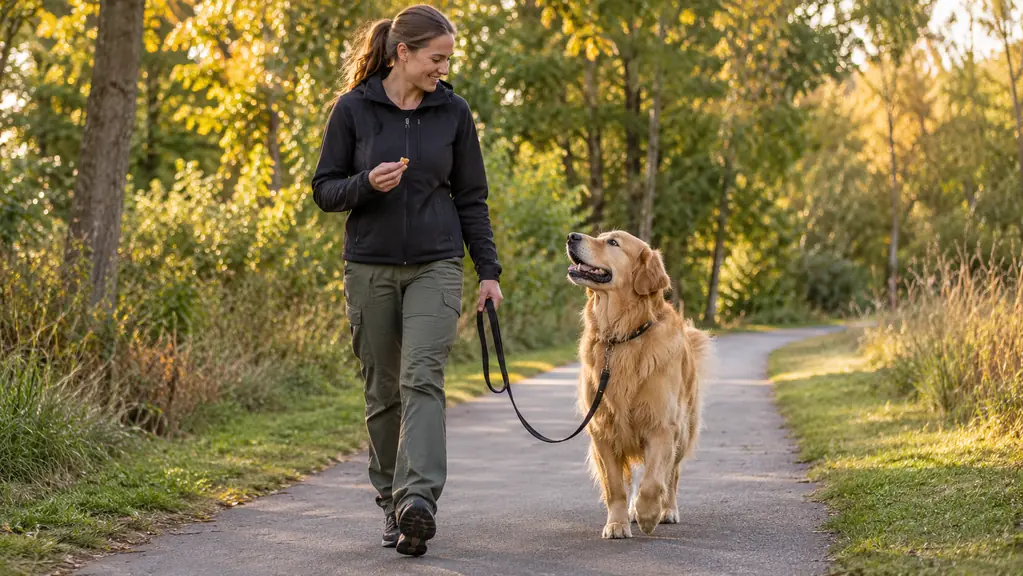
I do not give the harness all the credit. I carried treats in a pouch and rewarded Biscuit every time he looked back at me or let the leash go slack. I used a clicker for new behaviors, but for walking I mostly said yes and gave him a treat. The harness bought me the second or two I needed to reward the behavior I wanted. Without the harness, I was too busy hanging on to reward anything. Without the treats, the harness would have been a steering wheel with no gas.
The change held because we practiced. I did not put the harness on and hope. I walked the same boring loop, turned around when he pulled, and rewarded him when he came back to me. That is not a quick fix. It took weeks. If you want a product that does the work for you, this is not it. If you want a product that makes the work possible, this is exactly it.
The greenway was the real test. There are more dogs, more bikes, and more smells. The first few walks there were not calm. Biscuit pulled toward every dog he saw. I used the same turn-and-reward routine, and I kept the sessions short. By about five months, he could pass another dog at a distance without lunging. I do not think the harness did that. I think the practice did. The harness kept him from dragging me into the other dog while we practiced.
What I'd Tell a Friend Considering One
I would tell a friend to buy the Easy Walk if she has a strong dog who pulls and she is willing to train. I would tell her to check the weight range first, because the Large is not one-size-fits-all. I would tell her to fit it with help if she can, and to watch for rubbing behind the front legs. I would also tell her that the harness is not a punishment. It is a tool. The dog still needs to learn what you want.
I looked at head halters before I bought this. I decided against one because I did not feel confident learning a new piece of equipment on my own. I also considered a back-clip harness, but I had already tried one and it did nothing for the pulling. I did not try a prong collar or a choke chain. I did not want to use pain to teach a dog who was already anxious about the mail truck. That was my choice, not a judgment on anyone else.
What I would not do is buy the harness and stop there. The harness is the first step, not the whole plan. If you can afford one session with a reward-based trainer, do that. If you cannot, watch a few videos and keep the walks short. The harness will help you keep your footing while you learn. That is what it did for me.
One more small thing. The weight range got me close, but the fit is what matters. I checked the straps twice before our first walk and asked the vet to look at the chest strap. If you are between sizes or your dog has an unusual shape, get help before you use it. A harness that slides is worse than a harness that fits.
What I Liked
- Front chest clip gives real steering on a strong puller.
- Martingale loop adds gradual pressure instead of a hard jolt.
- Quick-snap shoulder straps and a buckle closure make it easier to put on.
- Rated for dogs from fifty to one hundred pounds.
- Nylon cleans up with a damp cloth.
- One-year limited warranty.
- Still holding up after two years of daily walks.
Where It Falls Short
- It is a management tool, not a cure for pulling.
- It does not stop barking, jumping, or lunging at other dogs.
- The fit has to be checked often or it shifts.
- Hand wash only, so it is not a quick machine wash.
- This size is wrong for dogs outside the fifty to one hundred pound range.
- Some dogs dislike a strap going over the head.
Who This Is For
The PetSafe Easy Walk is for the owner of a strong puller who is already walking every day and wants to keep walking. It fits dogs from fifty to one hundred pounds. It is for the person who will spend five minutes learning to fit it and a few weeks rewarding loose leash. It is for the person who wants a safer walk while a training plan takes hold. It is not for the person who wants a quick fix. I still use it twice a day. If I had to replace it tomorrow, I would buy the same harness in the same size.
Who Should Skip It
Skip it if your dog is under fifty pounds or over one hundred pounds. Skip it if your dog panics when a strap goes over his head, or if he has sensitive skin and rubs easily. Skip it if you want a device that stops pulling without any training. Skip it if you are not willing to check the fit every walk at first. The harness is not a substitute for a vet or a trainer, and it is not a treatment for separation anxiety. If your dog has a shoulder injury or a neck issue, ask your own vet before you use any harness. Skip it if you need a harness for a dog who backs out of straps. This one is not an escape-proof design.
Two years later, this is still the harness I clip on before every walk
It did not train Biscuit for me. It gave me a way to walk him while I trained him. If that is the kind of help you need, it is worth a look.
Amazon Check Today's Price on Amazon →