
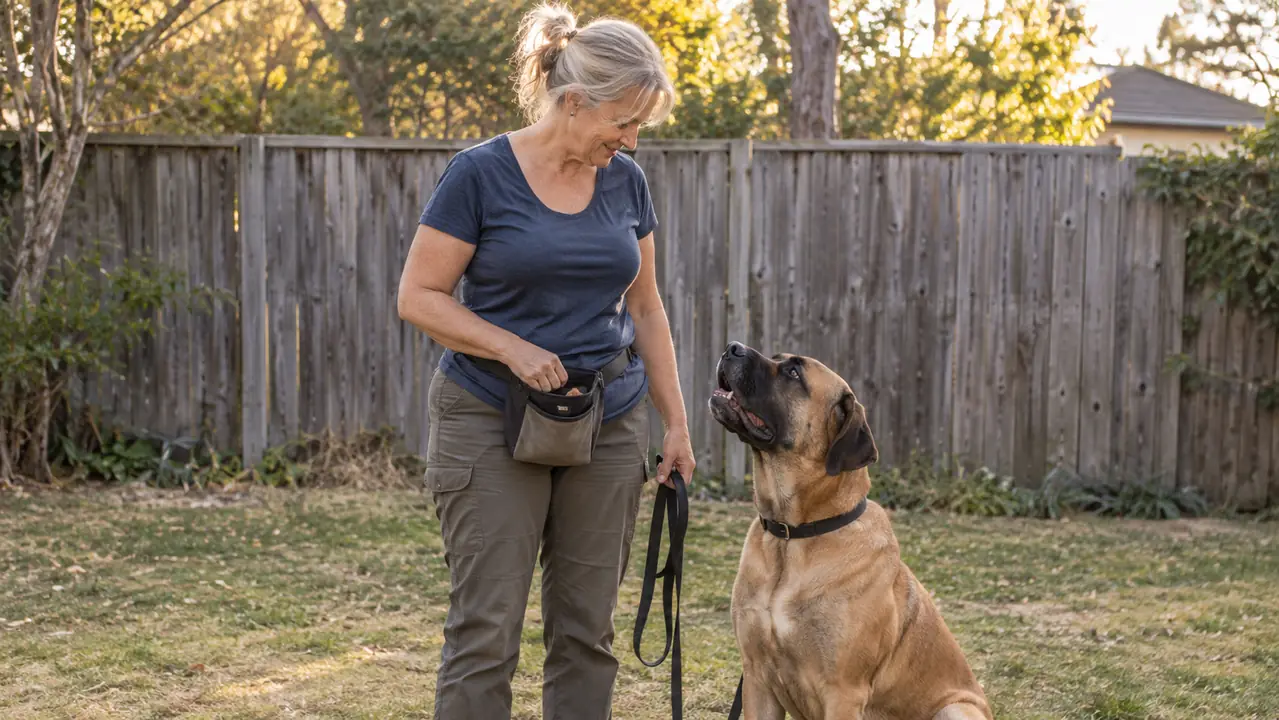
Here is the short answer before the details. If you are teaching a dog something new, a treat pouch beats a coat pocket. If you are just living with a dog and handing over a bite now and then, a coat pocket is fine, and you already own it. I have used both for the better part of two years, one on purpose and one out of plain laziness, and the difference shows up in about four seconds, which is roughly how long you have to get a treat into your dog's mouth before he decides you are not worth listening to.
Corinne Tabor here. My dog is Biscuit, a 4-year-old Labrador mix, 62 pounds, adopted from the shelter at 14 months. He came to me pulling hard on leash, jumping on guests, and barking at the mail truck every afternoon around one o'clock. I am not a trainer. I am 58, retired from driving a school bus in Knoxville, Tennessee, and I learned this by getting it wrong in front of my neighbors. The eBasics treat pouch has been on my belt for 22 months now. Before that, my coat pockets were the entire system, and that system ruined two good coats.
| eBasics Treat Pouch | Coat Pocket | |
|---|---|---|
| How much it holds | Up to 3 cups, so one fill covers a whole session | A handful, whatever fits beside your keys |
| Getting a treat out fast | Magnetic opening, one hand, eyes still on the dog | Dig past a phone, a tissue and a receipt |
| What it does to your clothes | Crumbs stay in the pouch, which you shake out in the yard | Kibble dust and grease end up in the lining |
| Carrying it | Adjustable belt up to about 50 inches, or clip it on | Nothing to carry at all |
| Remembering it on the way out the door | Only works if it goes on before the walk | Already on you, every single time |
| Looking conspicuous | A pouch on your hip, and people will ask about it | Nothing to see |
| Wet or smelly treats | 900 denier polyester, shake it out and let it dry | Wet kibble in a coat pocket is a smell you keep |
| Best for | Clicker sessions, new behaviors, recall practice | Quick trips out with one or two treats |
Where the eBasics Pouch Wins
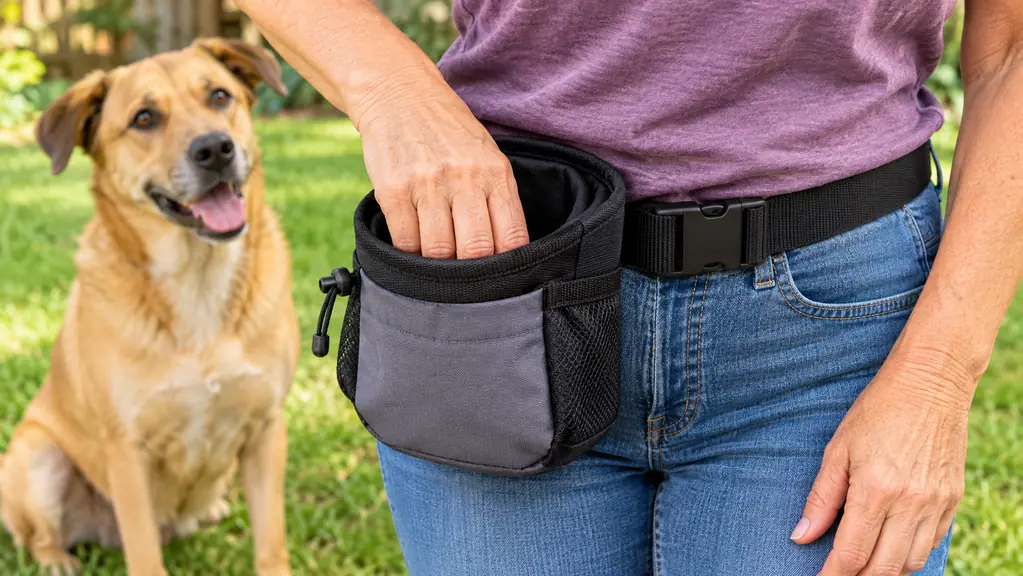
The first thing you notice is capacity. The pouch is 5 inches wide, 5.5 inches high and 3 inches deep when open, and it holds up to 3 cups of treats. That sounds like more than you need until you actually run a session. I fill it once with cut-up string cheese or plain kibble, work Biscuit through five or six repetitions of something new, and I am still not scrabbling for more. A coat pocket gives you a handful, and a handful is gone in four minutes. The moment you stop producing food is the moment your dog stops offering the behavior, and now you are walking back to the kitchen with a dog who has decided the lesson is over. The session ended because your pocket ran out, not because the dog learned everything he could.
The magnetic opening is the part I would pay attention to if I were you. My hands are not fast anymore, and one of them usually has a leash in it. The pouch opens and closes with one hand and one thumb and I never have to look down at it. That matters, because looking away from your dog during a session is how you miss the exact second he does the right thing. A coat pocket requires you to break eye contact, dig, and hope. I have stood in my own back yard with a leash wrapped around my wrist and my hand jammed into a coat, absolutely certain I had put cheese in there, and I was wrong.
The third thing is where it sits. The 900 denier polyester it is made from is the same sort of material as a backpack, so it does not fold over and spill when I bend down to pick up a dropped treat. It weighs under 5 ounces, so it is not dragging my pants down on one side. It comes with an adjustable belt that runs to about 50 inches at the longest, and I wear that on walks. In the yard, when I am in sweatpants with no belt loops worth trusting, I clip it on instead. Either way it stays where I put it, which is not something I can say for a handful of hot dog pieces in a fleece pocket.
Where Coat Pockets Win
I am not going to pretend pockets lose every round. They win the one that matters most on an ordinary Tuesday, which is that they are already on you. My pouch lives on a hook by the back door. If Biscuit starts barking at the mail truck and I want to reward him for coming inside instead, the pouch is twelve feet away and the pocket is right there. Pockets also win on being unnoticed. At the vet's office or in a hardware store, a coat pocket looks like a coat pocket. A pouch on your hip looks like a statement, and people will ask you what it is, usually while your dog is trying to eat a receipt.
Pockets win on setup too, which is nothing at all. Nothing to buckle, nothing to adjust, nothing to rinse out. If you want to keep training simple enough that you will actually do it, there is real value in a system with zero moving parts. And if your dog is eight years old and already knows how to sit, a pouch is more gear than the job requires. You are not running sessions. You just want to hand him a cookie when he comes in from the yard. Reach into the pocket and be done with it.
The Pouch That Survived 22 Months of My Back Yard
5 inches wide, 5.5 inches high, 3 inches deep when open, up to 3 cups, a magnetic opening I can work with one hand, and a belt that adjusts to about 50 inches or clips on. It has replaced my coat pockets for good.
Amazon Check Today's Price on Amazon →What 22 Months of Daily Wear Has Taught Me
This eBasics pouch has been in my house for 22 months and it has held up better than I expected. The magnetic closure still sits flush. The seams have not opened. The inside does not smell like anything dead, mostly because I shake it out in the yard after each session and turn it inside out over the trash can once a week. That is the whole maintenance routine. I have never put it in a washing machine, because I do not want to find out the hard way what a machine does to a magnetic strip.
The size is right for my hand. I have average hands and I can get two fingers and a thumb in without scraping my knuckles. At 3 inches deep there is enough room that a treat does not bounce out when I jog a few steps across the yard, and shallow enough that I can reach the bottom without hunting around. It holds treats and nothing else. My phone stays in my pants pocket on purpose, because a pouch that also carries your phone is a pouch you end up digging through with one hand while your dog waits and loses interest.
The belt is nothing fancy. It is a webbing strap with a buckle, and it adjusts out to about 50 inches at the longest setting. At my size I have a good eight inches of tail left over, and it has never once come loose on a walk. In the winter I wear it over a coat. In the summer I clip it straight to my waistband, because a belt over a t-shirt looks even more ridiculous than a belt on its own, and I have made my peace with that.
The Crumb Problem Nobody Warns You About
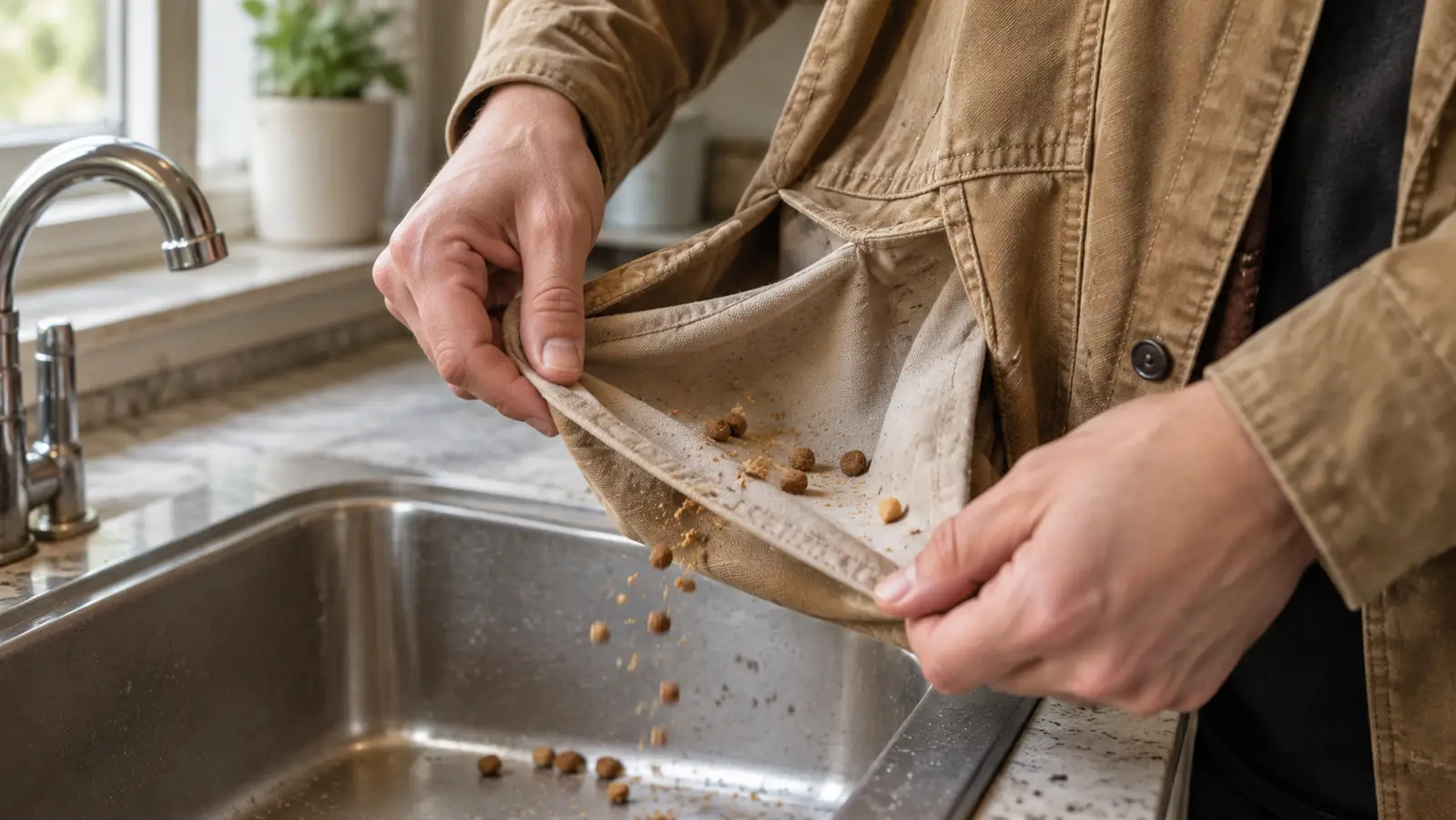
Two coats is what it took to learn this. The first was a canvas barn jacket I had owned since the nineties. I was stuffing kibble into the hip pocket for leash practice at the greenway, and after about a month the lining had a grease stain the shape of a fist. The second was a fleece. That one was worse, because fleece holds crumbs the way a carpet holds sand, and every time I put it on I found another piece of something in the cuff. I washed it. The crumbs came out and the pocket never felt clean again.
This is not a small thing if you train outside the house, which is where most of the useful training happens. A pouch keeps the mess in one container that you can dump and shake. That is the whole argument for it in a single sentence. The coat pockets also taught me something about timing. When the treat is rattling around loose in a pocket with your keys, you cannot get it out quietly. Every reach makes noise, and a dog who hears the bag rustle before you mark the behavior is a dog who is now watching your hand instead of thinking about what he just did.
Two coats ruined by kibble in the lining, and that is what finally got me to wear something on my belt.
How I Use Both in the Same Day
A normal day here uses both, and that is the honest answer to the question in the title. At 6:30 in the morning, Biscuit goes out to the yard and then we walk. I do not put the pouch on for that walk unless we are working on something specific. The walk is for sniffing and for the two of us getting out of the house. If he passes the neighbor's fence without losing his mind, I want to be able to mark it, so I put three or four pieces of kibble in my coat pocket and leave it at that. Three or four. That is a pocket-sized job.
The pouch comes out for the real sessions, and ours are short. Ten minutes in the back yard with the clicker and the pouch is a full session. New behavior, mark, reward, reset. When he was learning to hold a down-stay while I walked to the gate and back, that was a pouch session every time. Twenty repetitions needs twenty treats and then some, and it needs them fast, and it needs my eyes on him rather than on my pocket. That is the pouch's job, and I do not ask it to do anything else.
Same story with the long line at the greenway. Fifteen feet of nylon, clipped to the back ring of his flat collar, gloves on my hands because that line will burn you. Recall practice means a treat every single time he turns and comes, and that means a pocketful, which means the pouch. It also means I need a free hand, because the other one is holding fifteen feet of rope. That is the case for a pouch in a paragraph: the times you most need to reward are the times you least have a hand to spare.
Who Should Buy Which
Buy the eBasics pouch if you are actively teaching something. A puppy, a recent shelter dog, an older dog learning a new skill, anything where you are running sessions of five minutes or more. It is also the right call if you have hand or grip trouble, because fishing a loose piece of cheese out of a pocket while holding a leash is a small athletic event, and a magnetic opening is not. If you have been doing this with your coat for a year and your coat shows it, the pouch is worth the fuss.
Stay with pockets if your training is occasional and low-stakes. If your dog already knows the household rules and you are only handing out a cookie when he comes in from the yard, a pouch solves a problem you do not have. Stay with pockets also if you know yourself well enough to know you will not put something on before you walk out the door. A pouch that stays on the hook is worse than a pocket, because at least the pocket came with you.
Start With the Belt, Not Another Coat
Up to 3 cups, a magnetic opening I can work with one hand, 900 denier polyester, and an adjustable belt to about 50 inches or a clip. I have worn mine for 22 months and my jackets have stopped smelling like a deli.
Amazon Check Today's Price on Amazon →