
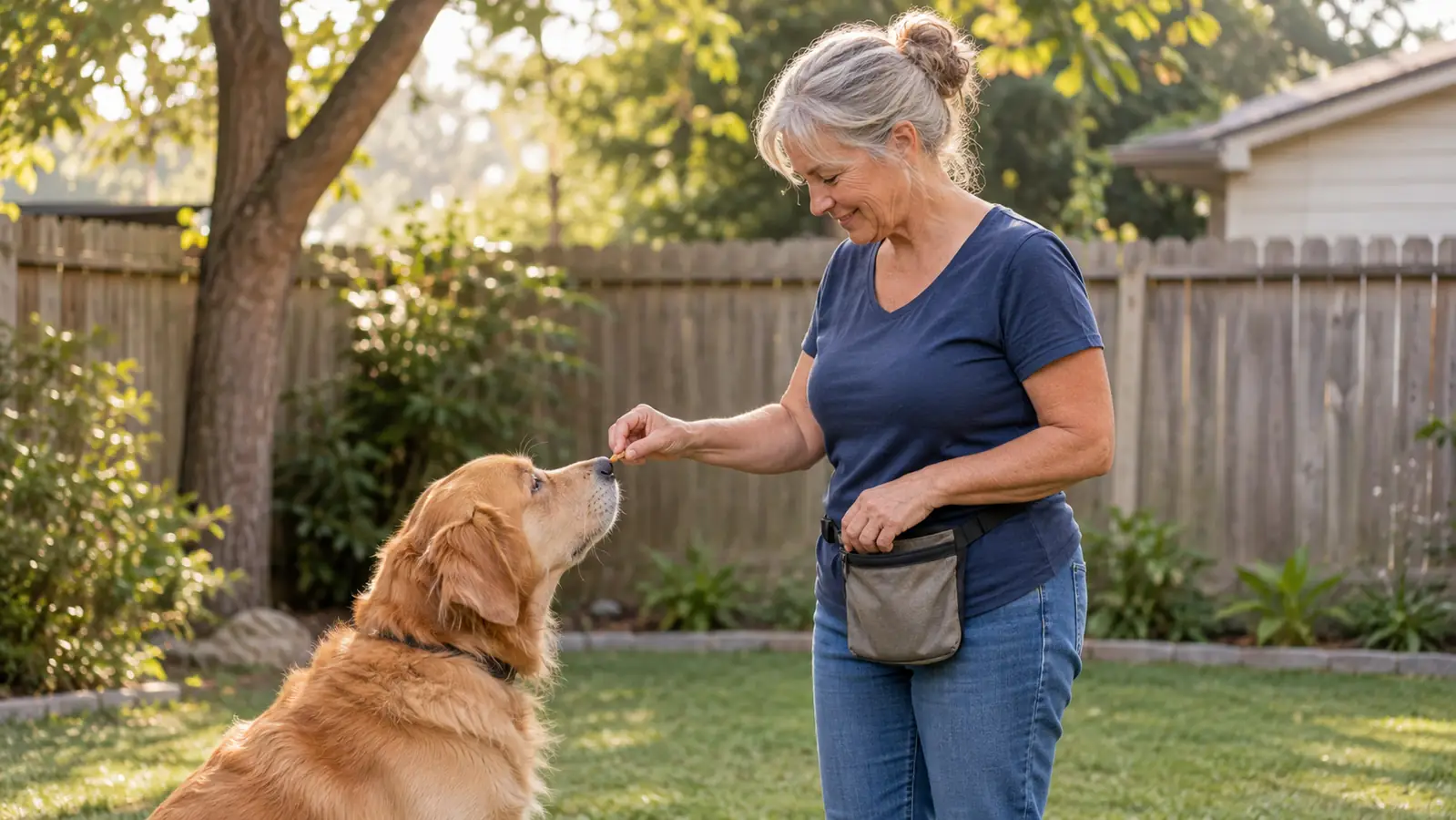
Biscuit came to me at fourteen months old with two settings, pull and bark. For the first year I kept a bag of treats in my coat pocket and I could not get one into his mouth at the right moment to save my life. By the time I dug past the keys and the grocery receipt, he had already moved on to something better, usually the mail truck. Timing is the whole thing in reward-based training, and my pockets were costing me every single rep.
I bought the eBasics treat pouch 22 months ago, after the second coat pocket gave out, and it is the piece of gear I have used more than any other in the house. It is a simple thing. Five inches wide, 5.5 inches high, 3 inches deep when open, made of 900 denier polyester, 4.9 ounces on my belt. What changed was not the treats. It was that my hand could find one without my eyes leaving the dog. Here are ten reasons that mattered in my yard and on my street.
The problem was never the treats. It was how slow I was.
Magnetic opening, 3 cups, 900 denier polyester, belt or clip. Twenty-two months of twice-daily use and it is still the first thing I pick up at the door.
Amazon See the eBasics Pouch on Amazon →Ten Reasons, In the Order They Helped Me
The treat arrives in the same second as the behavior
The gap between what Biscuit did and what I handed him used to be three or four seconds. That is an eternity to a dog. With the pouch on my hip, my hand goes in and comes out without me looking down, and the reward lands while he is still holding the sit. Same treat, same dog, better timing. If you take one thing off this list, take that one.
One hand opens it, so the other hand stays on the leash
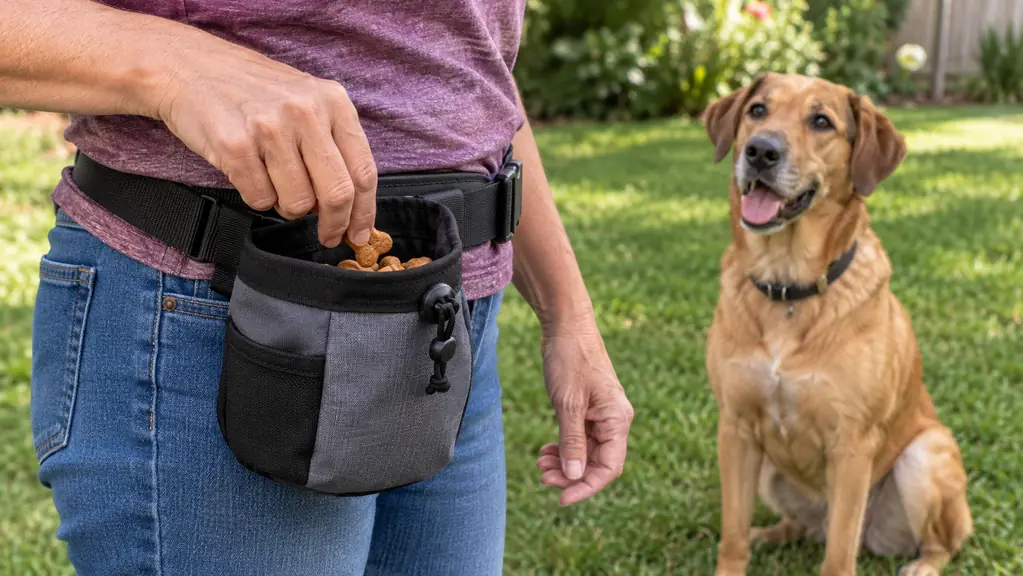
The opening is magnetic, so there is no zipper to fight with one hand while a 62 pound Lab mix leans at a squirrel. I keep my left hand on the leash and open the pouch with my right. The first week I noticed how often I used to let the leash go slack so I could dig for a treat. That stopped, and so did most of the lunging.
Three cups means I stopped being stingy
The pouch holds up to 3 cups. That sounds like more than you need until you start rewarding small and often, which is what actually works. I fill it once before the morning walk and I am not rationing by the end of the block. Five inches wide and 3 inches deep when open means my whole hand fits, and the size is listed as fitting all hand sizes, which I believe after 22 months.
It retired my coat pockets
Two coats died before this pouch. Crumbs in the lining, grease on the cuff, and a pocket that smelled like a deli by Thursday. The 900 denier polyester wipes out with a damp cloth and holds the mess inside instead of in my seams. My husband Ray noticed before I did. He said I had stopped leaving a trail through the kitchen.
You can place the reward exactly where you want the dog
Training is not only about what you pay, it is about where you pay. When Biscuit jumped on guests I paid him at the floor, and the pouch made that easy because I could pull a treat and drop it between his front feet without stepping back. Same when I wanted him on his mat. The pouch did not train him. It let me put the reward in the right place fast enough for it to mean something.
You stop fumbling and start standing still
Fumbling looks like movement, and movement is information to a dog. With the pouch on and my hands free, I stand still and wait. Biscuit settles faster when I am not doing a pocket search. It took me a while to see that my own busy hands were half the problem, and that a pouch with a belt solved it in a way that no amount of reading about timing ever did.
It lets you pay big for the hard wins
I keep the good treats in the pouch and ordinary kibble in the bowl. When Biscuit came the first time at the greenway on the 15 foot long line, that was a jackpot moment, four or five pieces in a row. You cannot do that out of a pocket without a mess on your sleeve. You can out of a pouch with room for 3 cups.
Belt for walks, clip for the yard
The belt on the eBasics goes to about 50 inches, so it fits over a winter coat or nothing at all, and there is a clip for the days I want it on my waistband instead. It weighs 4.9 ounces, which is nothing on a two mile walk. I wear it on the belt on walks and clipped in the yard for recall reps. One pouch covers both jobs.
It keeps training treats separate from dinner
Biscuit gets his meals in a bowl and his rewards from the pouch. That separation matters more than I expected. He knows the pouch means work, and he is sharper when it comes out. I asked Dr. Sellers how many treats was too many for a 62 pound dog and she gave me a number I now weigh out in the morning. The pouch just holds them.
It hangs by the back door, so the excuse dies
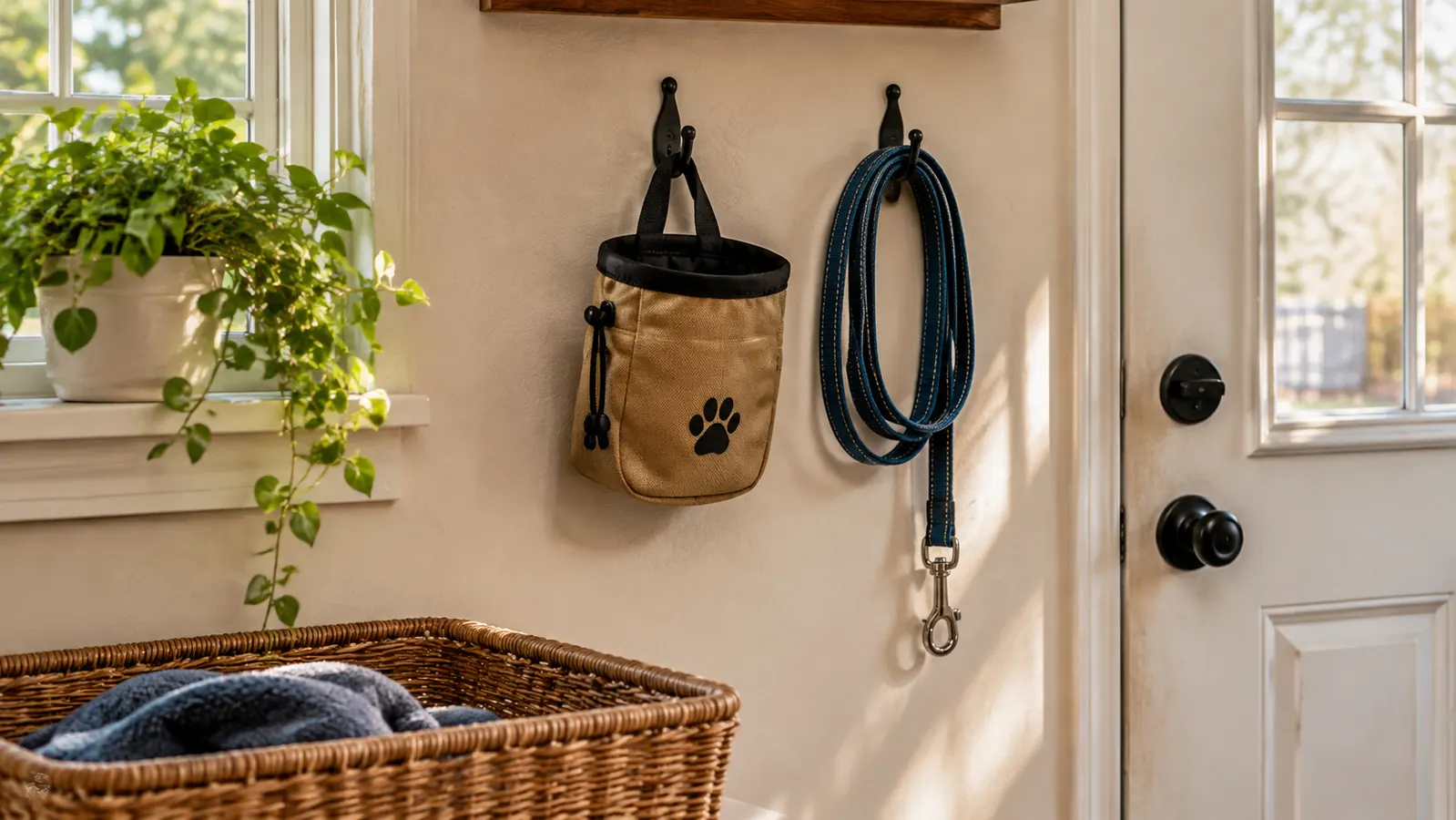
For the first year my training sessions depended on whether I remembered to load a pocket. Now the pouch hangs on a hook by the back door and gets filled before the first walk. Twenty-two months in, the magnetic opening still closes on its own and the fabric still looks like it did the year I bought it. That is a small thing. It is also the reason the other nine reasons happen at all.
What I'd Skip
I would skip this pouch, and any pouch, if your dog will not take food outside the kitchen. Fix that first or you will be carrying 3 cups of treats around for no reason. I would also skip the versions with a dozen compartments and a phone sleeve. You are reaching in at speed, in the rain, with a dog leaning, and every extra pocket is something to fumble. The eBasics is one bin with a magnetic lid and that turned out to be the right amount of pouch. Last thing. This does not stop pulling. My harness does that. The pouch carries rewards, and the rewards are what tell a dog which behavior paid.
Twenty-two months, two walks a day, and I have not once reached into a coat pocket for a treat since.
Buy the pouch first, then get after the pulling
The eBasics pouch carries the rewards. The harness handles the leash. I would give each one a month before deciding anything about your dog.
Amazon Check Availability on Amazon →