
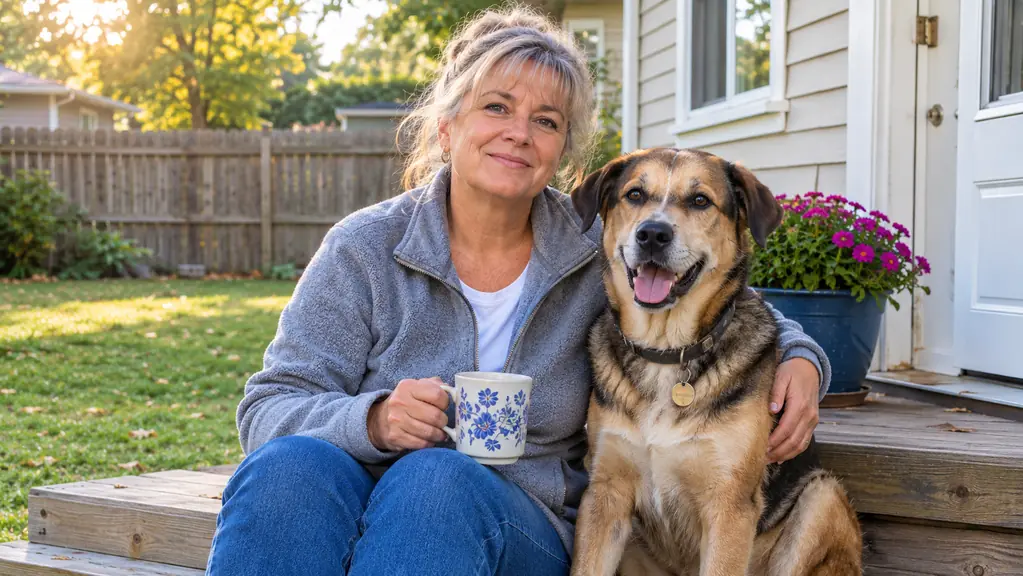
Short answer first, because it took me twenty months to be sure of it: for a behavior Biscuit has never done before, I reach for the clicker. For anything he already knows, I say the word yes and keep my hands where they are. That is the whole system in my house, and it is not a compromise I settled for. It is what the two markers are each actually good at.
The clicker I use is the HoAoOo two pack, the small one with a spring coil that goes over your wrist and a keyring on the end. I have had mine for about twenty months. One lives on my wrist for walks and yard work, and the spare lives in the kitchen drawer with the takeout menus. It is the only training tool I own that I still touch every week, and it is also the tool I use the least on any given day, because most of what Biscuit and I do together is old news to him by now. Both of those things are true at once. That is the comparison in a nutshell.
| HoAoOo clicker | A verbal marker (yes) | |
|---|---|---|
| Marking a behavior that is brand new | Same short sound in the same instant, every press, because a thumb is faster than a word | Works well, but my yes stretched longer when I was pleased, and Biscuit noticed |
| Two people using one signal | Identical sound whether Ray presses it or I do | Ray's yes is longer and rises at the end, and that is the honest truth |
| Keeping your mood out of the mark | A plastic tab cannot sound tired or annoyed | My voice carried every bit of my impatience in month one |
| Commands the dog already knows well | One more object to locate before you can pay the dog | Already in your mouth while your hands are full of leash and treats |
| Nothing to carry or forget | Lives on a wrist coil, but it still has to be on the wrist | Nothing to pick up, nothing to leave in a coat pocket |
| Marking at a distance outdoors | A short, small sound that wind and traffic eat on a greenway | Carries across a lawn with no equipment at all |
| A dog who startles at sharp sounds | Biscuit flinched for about a week before he settled | A quiet yes never startled him once |
| Handing the system to a sitter or a neighbor | You hand over the clicker and the signal is instantly correct | They will say yes in their own voice and mean something slightly different by accident |
| Losing it | Two in the pack, so a spare is in the drawer before you need it | Nothing to lose, and nothing to hand a friend either |
Where the HoAoOo Clicker Wins
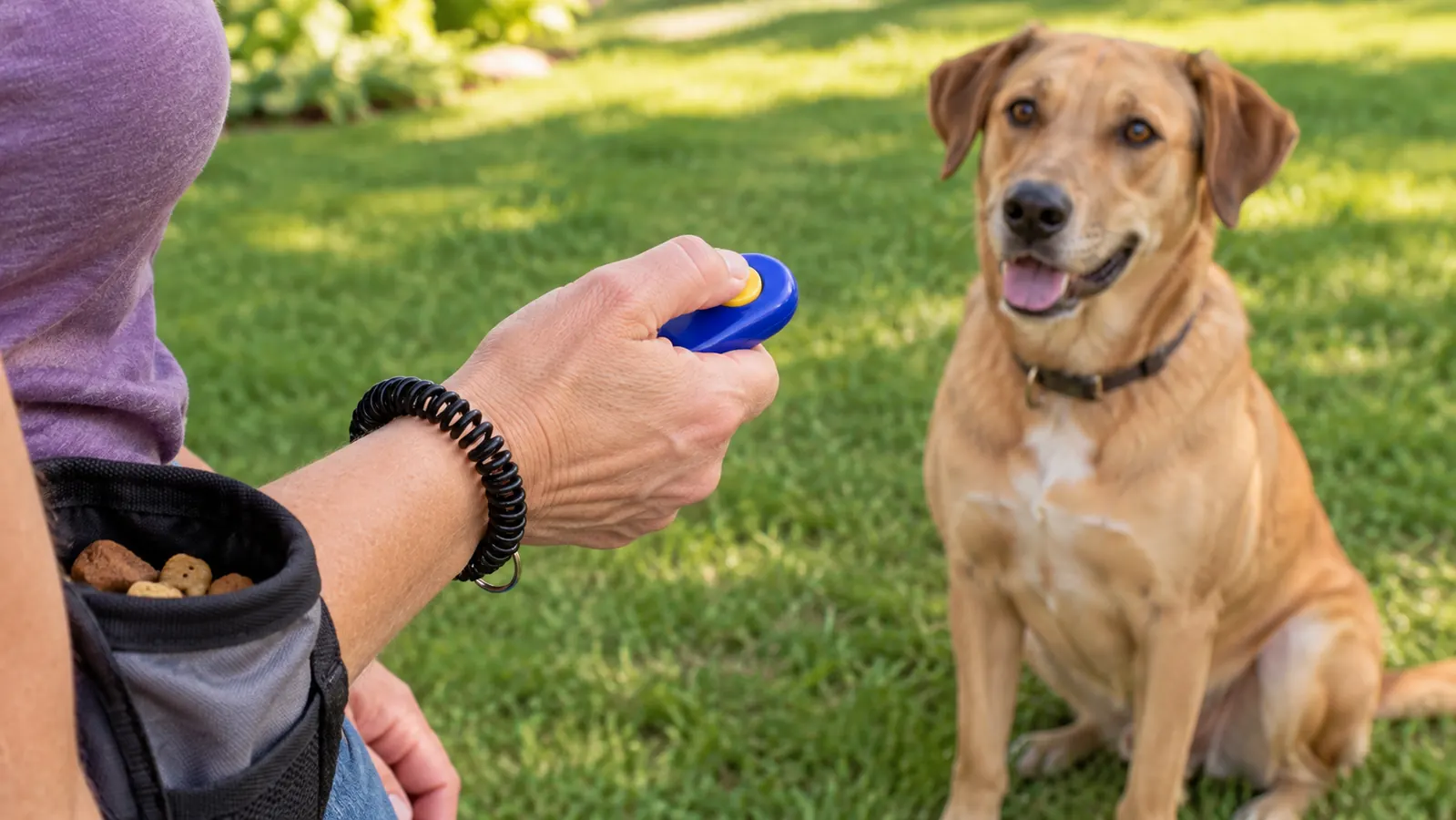
Timing is the entire argument, and I did not believe it until I watched myself get it wrong. In the first week I tried a verbal marker, I was saying yes about a half second after Biscuit's rear hit the floor. Half a second means nothing to me. To a dog learning a brand new word, it is the difference between sitting earning a reward and looking at Corinne earning a reward. Pressing a plastic tab is faster than forming a word, and the HoAoOo sits on my wrist on its coil, so the press is one thumb and no fumbling. The coil measures about 6.3 inches and stretches to roughly 9.84, which is enough slack to reach the tab without taking my eyes off the dog.
The second thing the clicker does better is stay identical when more than one person is in the room. Ray is retired and home all day, and he is happy to help, but his yes does not sound like my yes. Mine is short and flat. His is longer and goes up at the end, because he is a friendly man and it comes out that way. On the days Ray works Biscuit, the clicker is the only sound in this house that is the same no matter which of us is holding it. Having two in the pack is part of why that works. When the wrist one gets buried under a couch cushion or left in a coat pocket, I open the kitchen drawer and keep going instead of turning the house upside down.
The third place it earns its keep is any lesson where the moment is fast and physical. Biscuit used to launch himself at the front window when the mail truck came by around one in the afternoon. There is no way to catch that moment with a sentence. There is a way to catch it with a thumb. I clicked the instant his feet hit the floor instead of the glass, paid him, and did it again the next day. The clicker weighs about an ounce and a half, so it does not pull on the coil or swing around while I am moving, and the keyring on the end means it can hang on a hook by the back door between sessions instead of disappearing into a drawer for a month.
The clearest case was the week I taught him to put all four paws inside a laundry basket, which is a silly thing to teach a dog and took five days. On day one he put one paw in and I clicked. On day two he was offering two paws before my hand was even on the clicker. By day four he was stepping in and looking at my wrist, waiting for the sound. A word would have been lost in all that offering, because I was laughing and my yes kept changing pitch. The click did not change. It just kept saying the same thing back to him, which is the only job it has.
Where a Verbal Marker Wins
Now the part that took me longer to say out loud. For everything Biscuit already knows, the clicker is in the way. Sit, down, wait at the door, off the couch, leave the mail truck alone. He learned those a long time ago. Clicking for a sit he has done ten thousand times is paperwork, and I could feel myself starting to resent it, which is a bad sign in a training tool. The word yes comes out of my mouth while both hands are full of leash, treat pouch and a bag of poop, which is the real condition of most of my walks. A clicker wants a free hand and a little planning. A word wants neither.
Distance and noise are the other places the voice wins. On the greenway there is wind, traffic on the parkway, and a creek that runs loud for a day or two after rain. A click is a small, short sound. At forty feet with a headwind I am not confident Biscuit hears it, and I am not going to pretend I measured it with instruments. My voice carries. I did test the range question one Saturday with Ray standing at the far end of the open grass holding the leash while I walked backward and said yes. At about thirty paces Biscuit's head came up. At forty, with the wind off the creek, it did not. My voice is not as loud as I think it is, but it carries further than a plastic tab.
Then there is the startle question, which is the part nobody mentions in the short videos. The first few clicks made Biscuit flinch. I asked Dr. Sellers about it and she said a sharp new sound can take a dog a few days to get used to, so I clicked in the next room and paid him for it, and he was fine in about a week. A soft yes would have skipped that entirely.
The last one is visitors. When the doorbell rings and I am holding the door with one hand and Biscuit's collar with the other, I cannot press anything. I can say yes. I can say it while stepping back, while blocking the doorway, while holding a casserole dish a neighbor brought over. That is not a small thing. Half of what I actually needed to teach him happened in doorways, and doorways are where my hands are always full.
One press, one treat, one signal that never changes
Two clickers in the pack and a wrist coil so the mark is always within reach, with a spare in the drawer for the day the first one goes missing. Press to mark the moment, reward, repeat.
Amazon Check Today's Price on Amazon →Biscuit connected the click to the treat in about three short sessions. The word yes took most of a month, and the slow part was me.
How the Two Markers Split an Ordinary Week
Anything new gets the clicker. When I taught him to settle on a mat instead of pacing the living room while I cooked, that was a clicker job from the first session. I clicked the instant his elbows bent, then paid from the treat pouch on my belt. Three or four clicks a session, two sessions a day, and the mat started to mean something within a week. I did not say the word settle for the first several days. That is on purpose. The click does the teaching and the word gets added later, once the behavior is already happening.
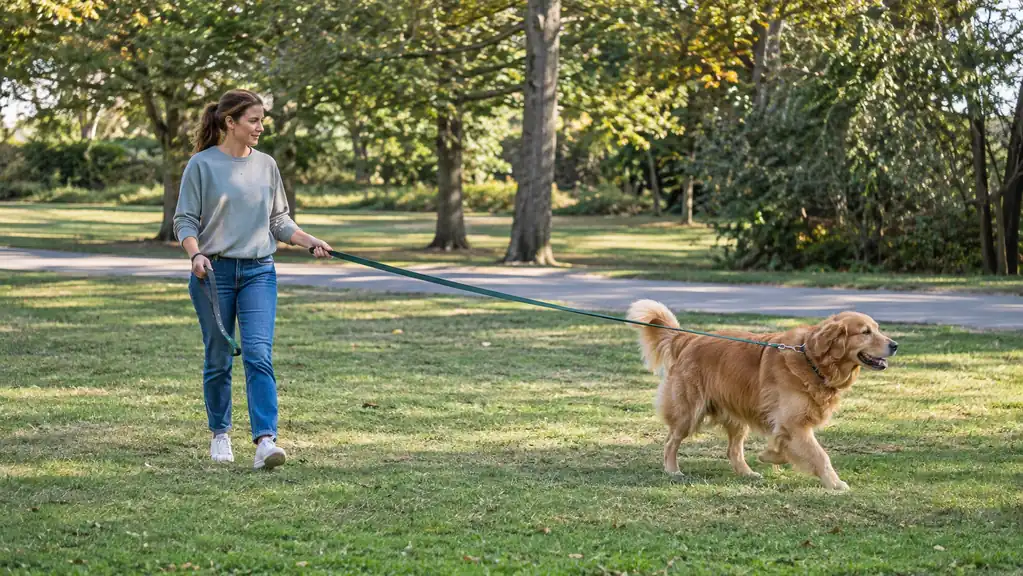
Anything he already knows gets the word. On our twice-a-day walks, the clicker stays on my wrist but I rarely touch it. Wait at the curb gets a yes. Come when I call him back from sniffing the same mailbox for the fourth time gets a yes and a piece of kibble from the pouch. The yes is also what I use at the vet's office and in the parking lot, where I want my hands free and my attention on everything else.
Here is what a Tuesday actually looks like. Six forty in the morning, out the back door, harness on, six foot leash clipped, treat pouch on the belt. We work the mat for maybe four minutes while the coffee finishes, and that is a clicker job. Then we walk the neighborhood and the clicker does nothing at all, because everything on that walk is something he has done a thousand times. In the evening we take the long line to the greenway if the weather is decent, and that is a voice job too, since the recall is old enough now that I am maintaining it rather than teaching it. Two short clicker sessions a week is all we need at this point. It was five a week in the beginning.
The handoff is the piece that made it click for me. Once Biscuit is offering a behavior reliably in the yard, I start saying the new word right before the click, then I say it instead of the click, then I fade the clicker out of that particular skill entirely. The clicker taught it. The word maintains it. The treat pouch carries the reward for both. I am not a trainer and I am not going to tell you this is the only way to sequence it, but it is what happened in my yard, and it is why I never felt like I was dragging equipment around for no reason.
Who Should Buy Which
Buy the HoAoOo pack if you are starting from zero on a behavior your dog does not know yet. If you have ever marked something a beat late and watched your dog look at your hand instead of do the thing, the clicker fixes that in a way that a word cannot, because a thumb is faster than a sentence. Buy it if more than one person in the house works the dog, since the sound does not change when it changes hands. Buy it if your dog is food motivated and you are willing to keep a pouch of something good nearby. The two pack matters more than it sounds, because these things get lost in couch cushions and the spare is what keeps you from quitting on a Tuesday.
My neighbor Deb asked me this same question back in March and I told her to get the clicker and keep saying yes. She has a nine year old beagle who already knows everything a beagle needs to know. She used the clicker twice, put it in a drawer, and went back to her voice. That was the right call for her and it is not a failure. If your dog is already trained, you are not really the customer for this thing, and I would rather tell you that than sell you a drawer ornament.
Stay with your voice if you already have an older dog who knows his commands and you are only maintaining them. Stay with it if your dog startles at sharp noises, or if you know you will not carry one more object on a walk. Stay with it if your hands are always full, which they are for most of us. A verbal marker costs no space, needs no drawer, and works at forty feet in wind. It is also the only marker you will still have with you when the clicker is on the kitchen counter and the mail truck is already at the curb.
What I actually recommend is both, with a line drawn between them. New behavior, click. Known behavior, say the word. If you are not sure which side of the line you are on, ask whether your dog could do the thing in a strange parking lot tomorrow. If the answer is yes, use your voice. If the answer is no, use the clicker until it is.
Start a new behavior with a clean mark this weekend
The HoAoOo pack comes with two clickers and a stretch wrist coil that reaches about 9.84 inches, so the press stays in one hand while the leash stays in the other. Mark the moment, pay the dog, and let the word come later.
Amazon Check Today's Price on Amazon →